
Politics · 6 Oct 2026
🇺🇸US Midterms 2026: Trump's Power, the Democrats' Revolt and the Money Behind Both



The Outsider's take
Democrats snubbed their future. Trump made the midterms about himself. A Republican nominee is caught on tape blaming his own party, a Senate candidate survived $30 million in AIPAC-backed attacks, and four weeks out the real fight is voters versus the money.
🇺🇸| The Outsider | October 6, 2026 | politics| Opinion and analysis
The overview
- Democrats have momentum four weeks out. Republicans are spending heavily to defend seats they once considered safe.
- Trump made the midterms a referendum on himself, and his own Texas candidate says that hurts.
- The Democratic establishment kept its most exciting candidates at arm's length, and now needs them.
- Record corporate and AIPAC money flows into every race.
- Key dates: **Oct. 19** (Texas early voting), **Oct. 24** (Obama rallies in Detroit), **Nov. 3** (Election Day).
Imagine your own party ignoring you.
Zohran Mamdani won the New York Democratic mayoral primary in 2025, and the party's senior figures went quiet. Governor Hochul didn't endorse until September. House leader Hakeem Jeffries waited until late October, then said Mamdani wasn't the party's future. Senate leader Chuck Schumer never endorsed him at all.
A year later, candidates Mamdani backed swept their primaries, including two who knocked out sitting House members. That constitutes half the 2026 story: a party that played it safe, now carried by the people it kept waiting. The other half is across the aisle.
The president who isn't on the ballot.
At the Republican midterm convention in Dallas, Trump urged supporters to "vote like I'm on the ballot." It's a good line, and an admission. If he's on the ballot in everyone's mind, every Republican is running on his approval ratings.
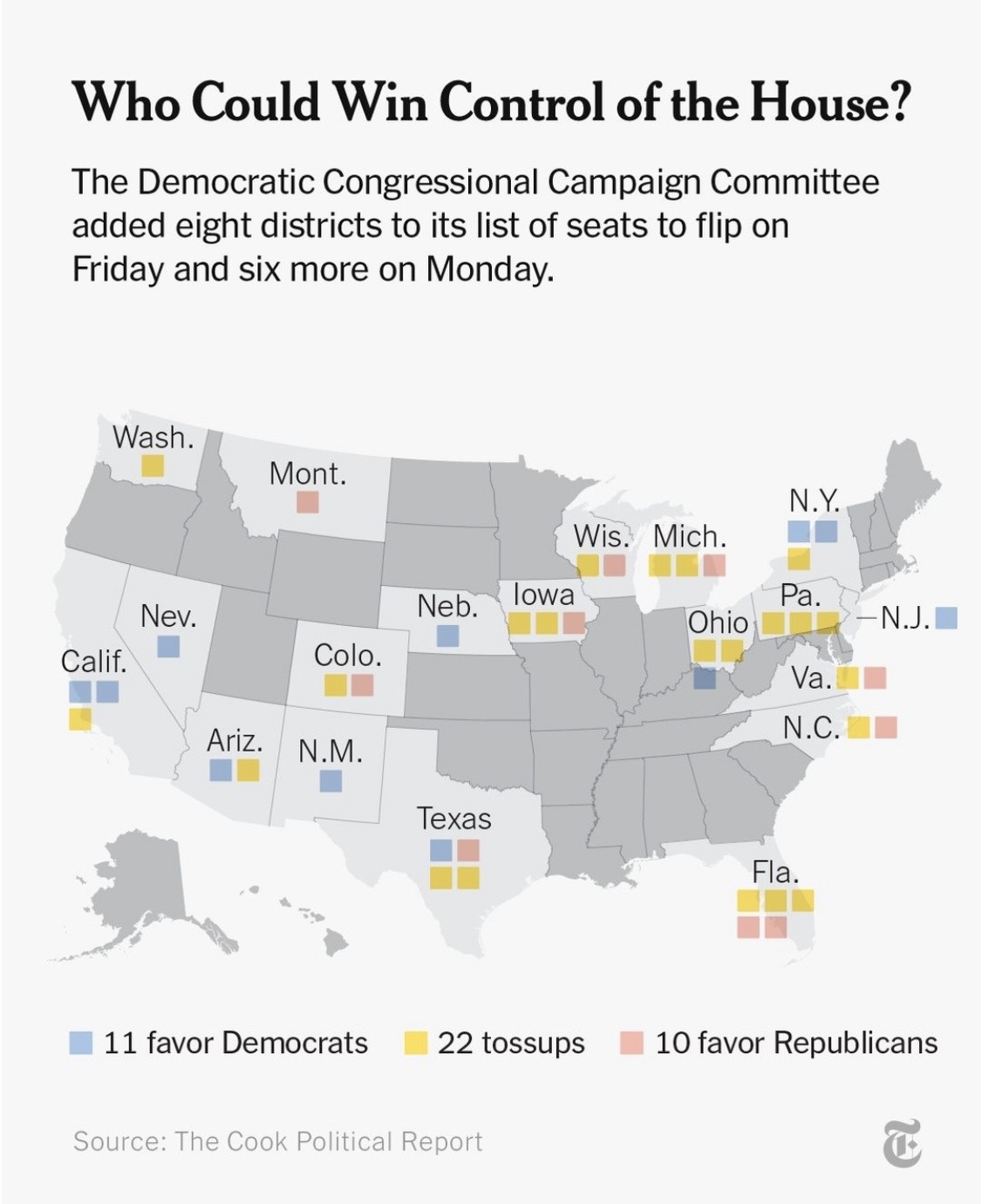
Democrats enter October with momentum while Republicans pour millions into races once seen as secure, Al Jazeera reports. Silver Bulletin has Democrats in excellent shape to retake the House and favoured to retake the Senate. Trump's explanation is that the party "can't get the word out." When a party answers poor numbers by insisting voters haven't heard how great things are, it usually means they have.
Texas: the tape Republicans can't un-hear
Ken Paxton won the Senate nomination with Trump's endorsement. Since then, two recordings have leaked. In audio obtained by the New York Times, he told donors, the Dallas convention "dropped our numbers." In a second, obtained by Politico, he said he has never felt less control over a race because "it's all coming from D.C." His camp called the first leak manipulated. Trump has called Paxton a "pain in the ass" while campaigning for him.
Democrat James Talarico, a 37-year-old former teacher and seminarian, leads: 51 to 45 in NYT/Siena, 50 to 44 in Marist, and about two points up in the Texas Tribune average. Republicans are responding with cash. Thune's Senate PAC has spent $131 million, and Republicans account for about 72% of broadcast ads.
If Texas flips, Republicans, who hold the Senate 53 to 47, can only afford to lose two more seats. A state they haven't lost statewide since 1994 would be in play for 2028.
Michigan: $60 million to stop one candidate.
Abdul El-Sayed faced more than $60 million in foreign money in his primary. AIPAC's super PAC spent a record $30.6 million in that one race, and over $104 million across the cycle, not counting allied groups. He won by fewer than 15,000 votes whilst refusing corporate PAC money, though he lost Wayne County to Haley Stevens. He now faces Republican Mike Rogers in a toss-up, with a Washington Post-Schar poll showing him slightly ahead.
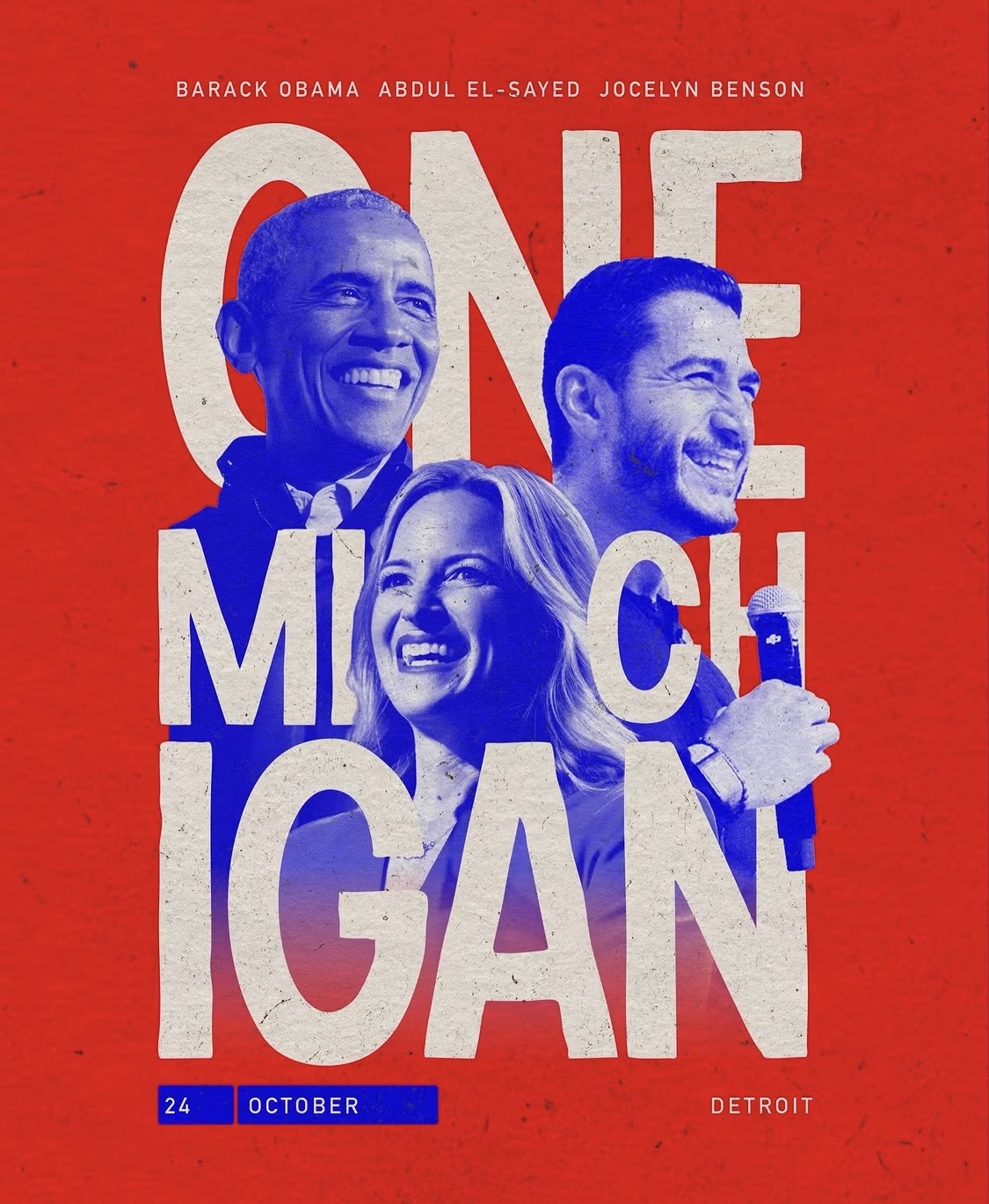
Now the establishment is showing up. Sen. Elissa Slotkin has campaigned with him, Kamala Harris came to Michigan, and on Oct. 24 Barack Obama will rallies in Detroit with El-Sayed and Jocelyn Benson, the day early voting opens. El-Sayed has called Obama's signature health law "incremental." Obama is coming anyway, because the Senate runs through Michigan.
The Hasan Piker problem.
The messy part: streamer Hasan Piker campaigned with El-Sayed, and Rogers has made that central to his campaign. Piker's past remarks on 9/11 and Israel drew sharp criticism, including from the DNC chair, and a handful of Michigan Democrats have endorsed Rogers. Piker says his job isn't to make the party look good. Democrats can't control independent voices, and if the whole race is about a streamer, the message is failing.
Follow the money (it doesn't have a party).
Corporations have given a record €646 million to the midterms, 40% more than all of 2024, according to Public Citizen. Crypto, online betting and AI account for €344 million. Trump's MAGA Inc. started the year with €294 million in cash, and Reuters reports tobacco and cannabis money going largely to Republicans. Dark money isn't counted at all.
The pitch to working-class voters is that Trump is fighting the swamp. The money suggests the swamp has a new address. And a candidate who refuses corporate money and survives €60 million against him threatens the same system.
My argument.
Two parties made the same mistake from opposite directions. Democrats treated their most energetic candidates as liabilities. Trump bet he could turn a midterm into a referendum on himself, making his approval ratings (the lowest in any American presidency), his convention and the economy the key story. Republicans are already spending heavily to demonstrate how worried they are.
That gives Democrats an opening bigger than their strategy earned. Young voters show what's at stake: voters under 30 backed Trump by 43% in 2024, according to Time. The candidates who can win them back are the ones the establishment kept waiting.
The other side.
Republican turnout.
The RNC says Trump is energising the base. Midterm turnout can defy polls, and Texas hasn't elected a Democrat statewide since 1994.
Electability.
Moderates say Mamdani-style candidates give Republicans easy attack ads in swing districts.
Tight polls.
El-Sayed's lead is narrow and Texas is within a couple of points.
AIPAC.
Defenders call its spending legitimate advocacy. Critics say its scale distorts primaries.
On Piker.
Some strategists say he's a distraction the party can't afford.
Here's what no one can argue with: in four weeks, voters, not donors or consultants, decide who was right.