
Politics · 4 Oct 2026
25 Years to Build, One Election to Break? Lula or Bolsonaro: Brazil is voting today.
The Outsider's take
Politics/ The Outsider/ 4 October 2026
Democracy, the Amazon, Trump's reach and a trade deal covering 700 million people all hang on a neck-and-neck vote.
THE OUTSIDER'S TAKE
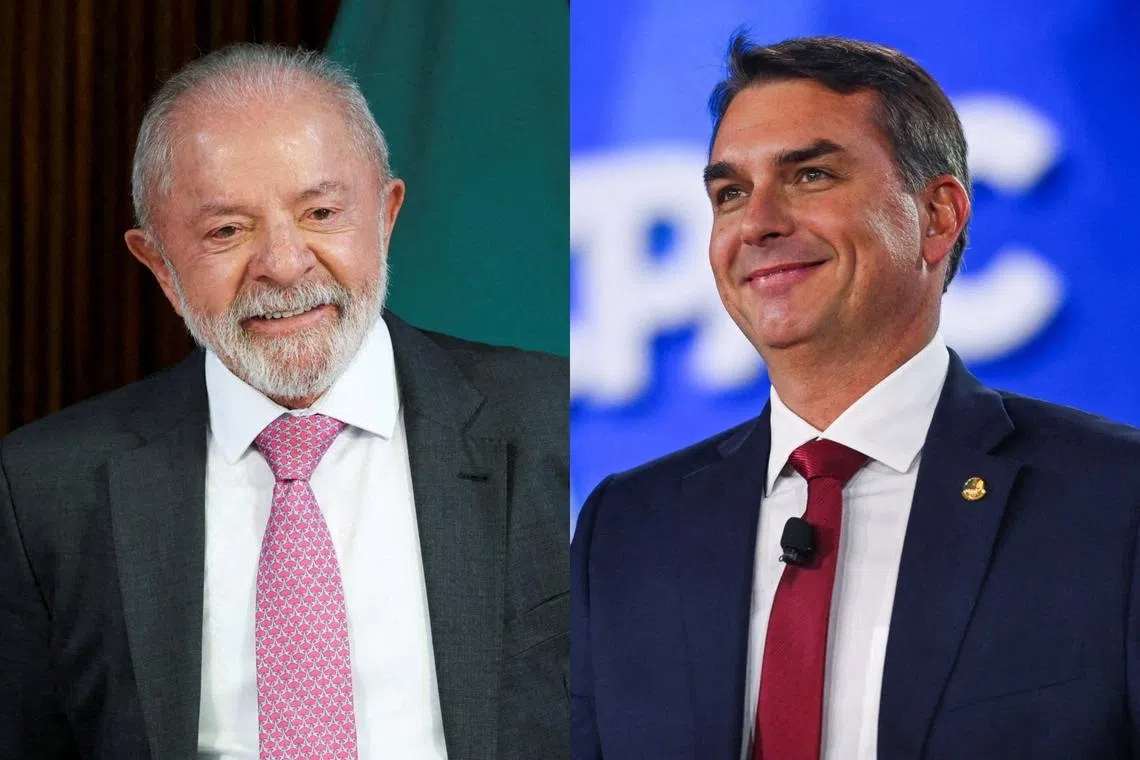
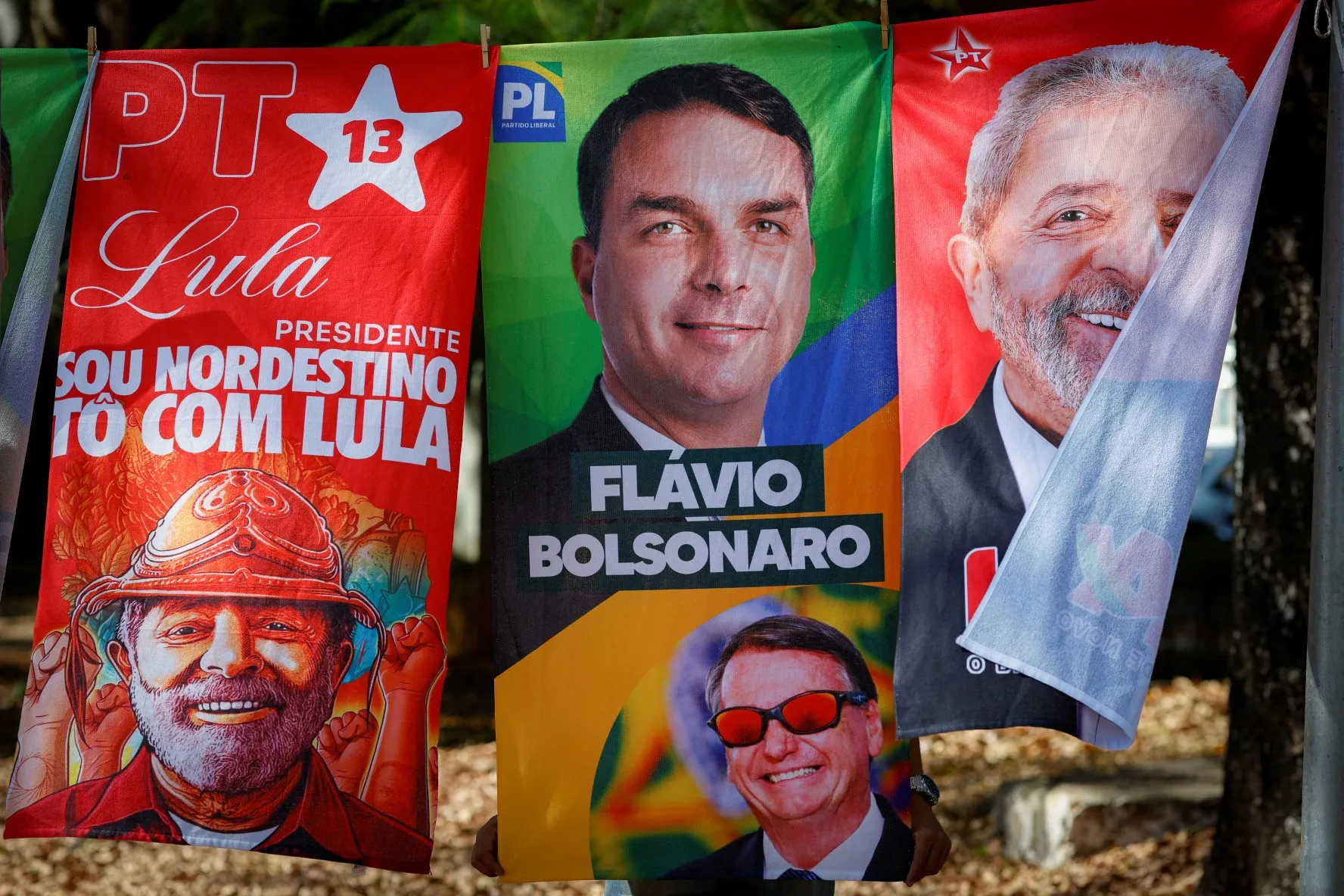
Brazil goes to the polls today, and the world should be watching. President Luiz Inácio Lula da Silva, 80, is seeking a fourth term. His challenger is Senator Flávio Bolsonaro, 45, son of former president Jair Bolsonaro, who is barred from running and was sentenced to prison for his role in a coup plot after losing in 2022. A candidate needs more than 50% of valid votes to win outright. If no one does, the top two go to a runoff on 25 October, the likelier outcome.
The polls explain why. Lula leads most first-round surveys, but runoff simulations are essentially tied. Data, taken 22–24 September, gave Lula 47% to 45% in a runoff, while others had Flávio ahead by 42% to 41%. In four months, Flávio Bolsonaro has erased a runoff deficit that was once 23 points. Both men also carry high rejection rates: in a March poll, 46% said they would never vote for Lula and 45% said the same of Flávio.
The stakes reach well beyond Brazil. We see four big risks at home and abroad, and a trade deal in Europe that could be the biggest casualty.
A democracy under stress
Brazil has some of the world's strictest rules against election disinformation, including bans on deepfakes and on chatbots impersonating candidates. Enforcing them is another matter. Risk analysts expect AI-driven falsehoods to flood this campaign. Two investigations, by Ekō and Amnesty International, found that Meta's ad system approved mock election ads containing disinformation; Amnesty reported eight of 14 were accepted. Brazil's electoral court has given Meta ten days to explain.
Memories of 2022 are fresh. Then, unproven claims about electronic voting machines fed the movement that ended in the 8 January 2023 attacks on government buildings. The real test comes if the result is close: will the loser accept it?
Washington's long shadow
This election has become a test of Donald Trump's influence in South America. His administration imposed a 50% tariff in 2025 and added new 25% tariffs this summer, citing issues such as illegal deforestation and payment practices. Lula calls this interference, and his government has said it will use its Reciprocity Law and take the tariffs to the WTO. Flávio Bolsonaro met Trump at the White House in May and pledged that Brazil would join Trump's "Shield of the Americas" if he wins. Lula accuses him of lobbying for the tariffs, while Flávio asked Washington to hold them until after the vote.
Trump says he is following the election "very closely" but has not endorsed anyone. On October 2, the US suspended in-person consular services in Brazil, citing unspecified security concerns. Three Democrat US senators accuse the administration of a campaign of interference and destabilisation; the White House rejects this. Whatever the truth, the perception alone feeds the sovereignty message that Lula's campaign leans on.
The Amazon and the climate
Brazil holds about 60% of the Amazon. Under Jair Bolsonaro, deforestation surged by around 60%; since Lula restored his anti-deforestation plan in 2023, it has fallen to its lowest level in a decade. Experts warn that a Flávio Bolsonaro win could bring back policies favouring agribusiness and mining. That would threaten Brazil's pledges to end illegal deforestation by 2030 and cut emissions by up to 67% by 2035, just weeks before COP31 opens in Türkiye on 9 November.
What this election means for Europe: a deal that hangs by a thread
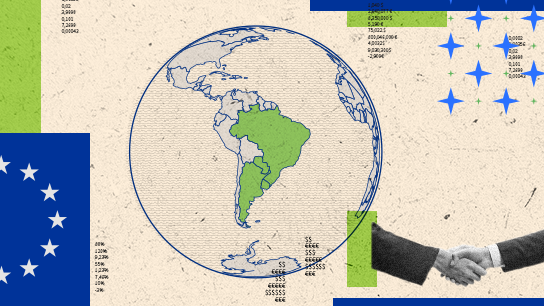
For Europe, this is not a distant vote. The EU-Mercosur agreement, 25 years in the making, has applied provisionally since 1 May, covering some 700 million people. Trade has picked up: Brazilian exports to the EU reached $26.9 billion in the first half of the year, up almost 13%. Supporters in Germany and Spain argue the pact offsets Trump's tariffs and reduces dependence on China for critical minerals; the EU imports 82% of its niobium, used in medical scanners, from Mercosur countries.
But "in force" is not the same as "safe". Four pressures now meet at once.
Legal limbo. Full ratification is frozen. On 21 January, the European Parliament voted by just ten votes (334 to 324) to ask the EU's Court of Justice whether the deal is compatible with the EU treaties. Past opinions of this kind have taken 16 to 26 months, pointing to an answer between mid-2027 and early 2028. Poland has also filed its own complaint; on 29 September the Court refused its request to suspend the agreement in the meantime, but a final ruling is still to come.
The beef problem.
The EU suspended imports of Brazilian beef, poultry and other animal products from 3 September, over concerns about Brazil's compliance with EU rules on antimicrobial use. On 28 September, a senior Commission food-safety official told MEPs that, because Brazil would need proper traceability from birth, beef is unlikely to return for around two years. An Irish MEP added that the Commission's worries over the hormone oestradiol remain unresolved. This is a food-safety measure, not a verdict on the trade deal, but for European farmers it looks like proof of what they have warned about for years.
Farmers who never accepted the deal.
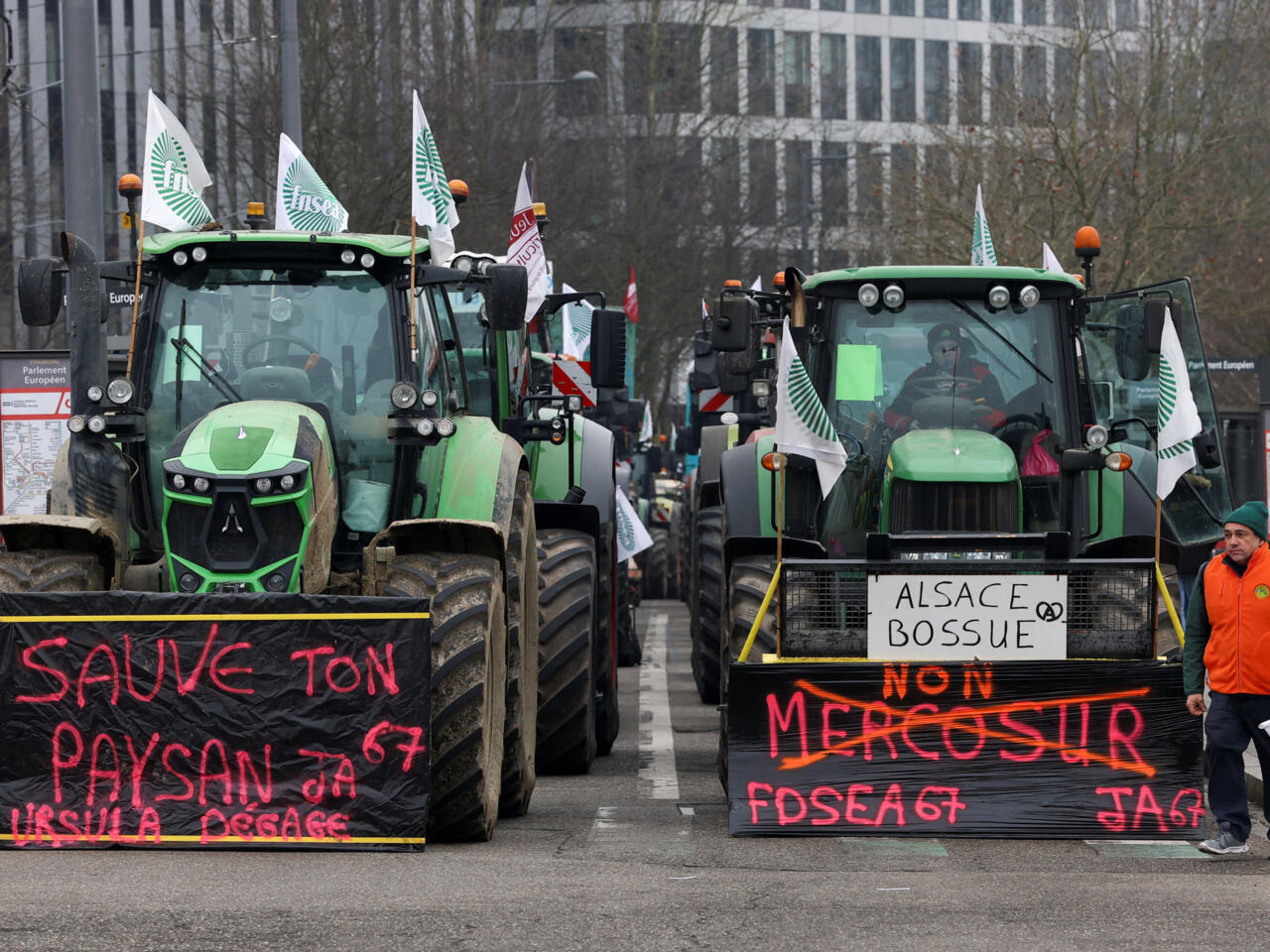
In December, tractors blocked Brussels streets and police used tear gas outside an EU summit. France demanded tougher safeguards, "mirror clauses" forcing Mercosur producers to follow EU pesticide rules, and tighter inspections. Even a proposed €45 billion farm-support package did not win over French farmers, and France's agriculture minister said the project remained deeply destabilising for beef, poultry, sugar and ethanol. France, Poland and Austria have opposed the deal.
The Brazilian wild card.
John Clarke, a former European Commission trade negotiator, has argued that ratification next year depends on Lula staying in office. Bernd Lange, who chairs the European Parliament's trade committee, is more cautious: a Flávio Bolsonaro win would not automatically make ratification harder, he says, but it would depend on the concrete policies. What do we know about those policies? Flávio has called for more flexibility within Mercosur and for the closest possible alliance with the United States, and has offered Brazil's resources to help America reduce its dependence on China.
Lula has rejected Washington's attempt to tie access to critical minerals to tariff conditions. Analysts who follow the Brazil-EU relationship expect a Flávio government to bring an agenda similar to his father's.
Europe has been here before. In 2019, surging Amazon deforestation under Jair Bolsonaro put the deal in jeopardy, and France's president warned he would not sign if Brazil left the Paris climate accord. Today, the EU's own deforestation regulation is due to take effect at the end of 2026, so any rollback of Amazon protection could collide directly with European law and politics.
Our assessment of the scenarios
If Lula wins: continuity, and a partner with a better Amazon record to show European sceptics. But his victory does not solve the farmers' revolt, the beef ban or the court case. Expect friction over beef and poultry quotas, safeguards and the deforestation rules. Brazil will remain a partner that courts China and BRICS and takes Washington to the WTO.
If Flávio Bolsonaro wins: markets may cheer, and Brazil would likely move closer to Washington. European critics of the deal would gain fresh ammunition just as the Court's opinion is pending. The worry in Brussels is that Europe's attempt to diversify away from both Trump's tariffs and China's export curbs would lose its most important South American partner.
If it goes to a runoff: expect three weeks of uncertainty. EU leaders meet in Brussels on 15 and 16 October, in the middle of the Brazilian campaign, with competitiveness, Ukraine, defence and enlargement already on their agenda.
And beyond Europe
China buys about 29% of Brazil's exports, and Lula has courted Chinese investment and BRICS. India and Mercosur have just launched talks to expand their trade pact. Argentina and El Salvador already sit in Trump's "Shield of the Americas", and several of Brazil's neighbours have swung right. The result will shape whether the Global South's largest democracies lean toward Washington, toward Beijing, or try to keep both at arm's length.
Open questions
Will the loser accept the result? Can Brazil's electoral court keep AI-driven disinformation in check? Will the US stay out? Will a new government keep the forest standing, and satisfy European voters who want proof? Can the EU win back its farmers' trust while keeping the deal alive? And if the world's biggest trade bloc and Latin America's biggest economy cannot make an agreement work, what does that say about cooperation in an age of tariffs?
For readers, and observers, this is not abstract. The food on your plate, the price of your next phone and the fate of the world's largest rainforest are all tied up in the same vote.