
Culture · 8 Oct 2026
Anne Carson wins the Nobel Prize in Literature
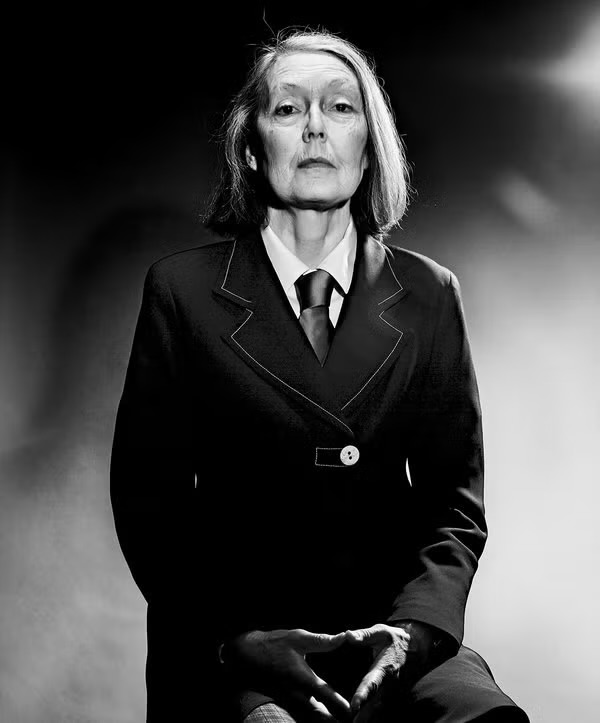

The Outsider's take
“Why does tragedy exist? Because you are full of rage. Why are you full of rage? Because you are full of grief.” By Anne Carson, Grief Lessons.
The Canadian poet Anne Carson has won the 2026 Nobel Prize in Literature, a prize she had long been tipped to win and one that rewards a writer who has never stayed inside a single genre.
Born in Toronto in 1950, Carson trained as a classicist. Her career has been spent moving between poetry, essays, translation, and the university classroom. Her first major work, Eros the Bittersweet (1986), is a desire essay that begins with the ancient Greek poet Sappho. Her best-known book, Autobiography of Red (1998), is a verse novel that retells a Greek myth about a winged red monster as a modern coming-of-age and love story.
Carson's books don't sit easily on a shelf. Nox is a folded, scrapbook-style book-in-a-box mourning her brother. The Beauty of the Husband tells the collapse of a marriage as a sequence of short numbered pieces. Norma Jeane Baker of Troy puts Marilyn Monroe and Helen of Troy side by side. Her writing is formally daring, but the subject is usually the same: grief, desire, and what is left of a person once the relationship ends.
She is one of the most decorated writers of her generation. She won Spain's Princess of Asturias Award in 2020 and the PEN/Nabokov Award in 2021, and has taught at universities including Michigan, Princeton, McGill and NYU. For years she has appeared on the shortlists of Nobel watchers.
Her win suggests that the Academy is willing to honour writers who treat the old and the new as one conversation. For young readers who feel poetry is not for them, she is a good place to start. She is demanding, but never cold.
Rage and grief: Carson's idea in a time of war
Carson's sharpest idea about tragedy is a chain of cause and effect. Violence comes from rage, and rage comes from grief. “Why does tragedy exist? Because you are full of rage. Why are you full of rage? Because you are full of grief.”
By Anne Carson, Grief Lessons.
It is a useful way to read today's wars. The anger on our screens and in our politics often starts as unprocessed loss: the dead of Gaza, Israel, Ukraine, Sudan and eastern Congo, and the families who bury them. Carson's point is that rage is rarely the root, because grief comes first.
A world that answers grief with more violence only produces more of it, and that cycle is what the Greek tragedians were writing about 2,500 years ago.