
Political Trajectory · 22 Oct 2026
Without Bernie, No Mamdani, Abdul El-Sayed or Alexandria Ocasio-Cortez: The Man Who Opened the Door


The Outsider's take
The Outsider / first “political Trajectory analysis/publication. To understand the current US political transformation of the Democratic Party, The Outsider offers a deep look at Bernie Sanders.
They laughed at him, in 2015, Bernie Sanders announced his run for president to little fanfare, and the establishment treated his ideas as fantasy. A $15 minimum wage? Medicare for All? Unserious.
Eleven years later, a socialist runs New York City, and the Democratic Party's own voters keep choosing candidates who sound like him.
Pretending this is a coincidence takes real effort.
Three heirs, one movement.
A week before the 2025 primary, Sanders endorsed Mamdani. The new Mayor said Sanders had been the most influential political figure in his life. He won. On January 1, 2026, Sanders administered the ceremonial oath at City Hall. That was a passing of the torch in public.
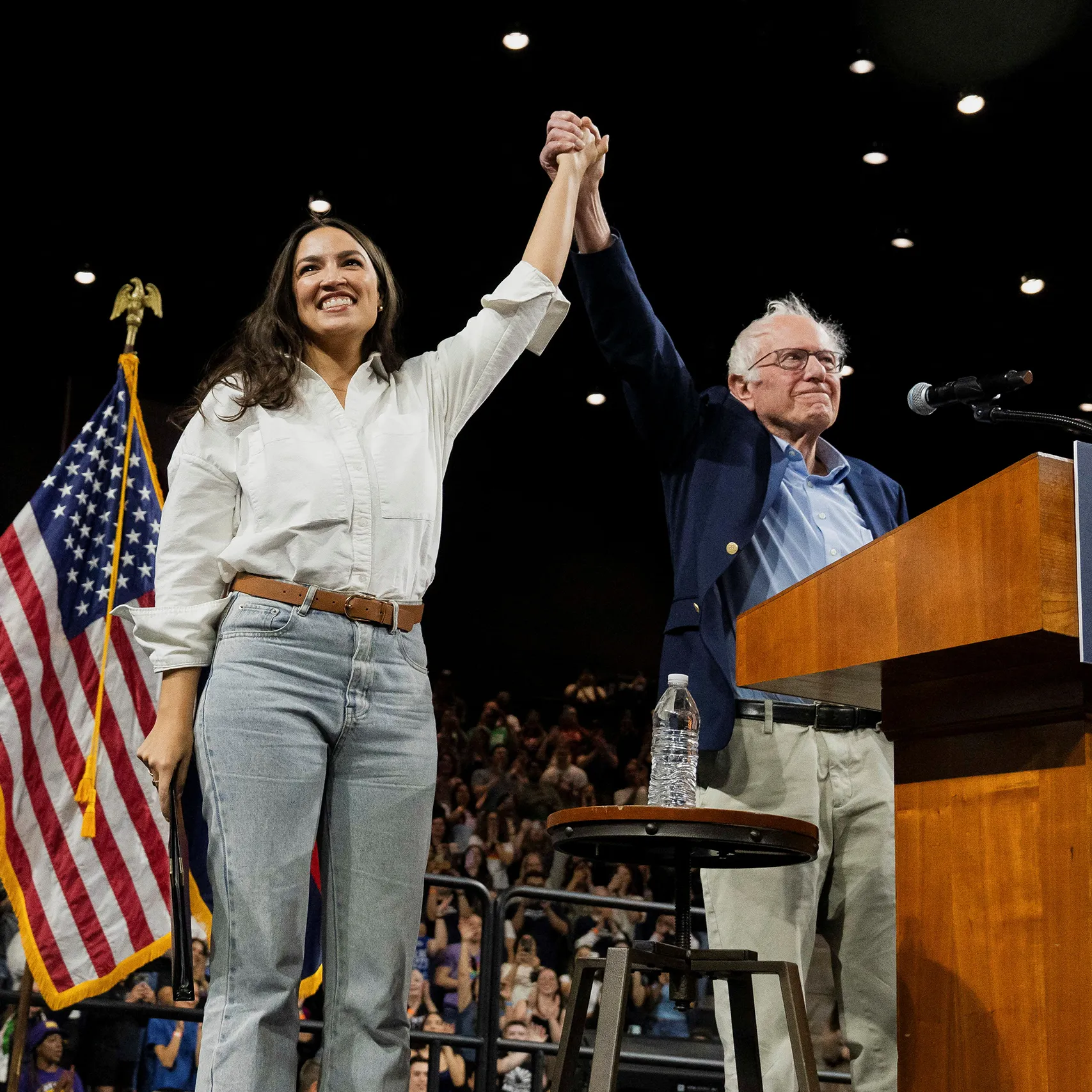
Ocasio-Cortez. She and Sanders toured the country in 2025, drawing more than 200,000 people by organizers' count. She is not a fan of his. She is his political partner, and the crowds suggest she is also his successor.
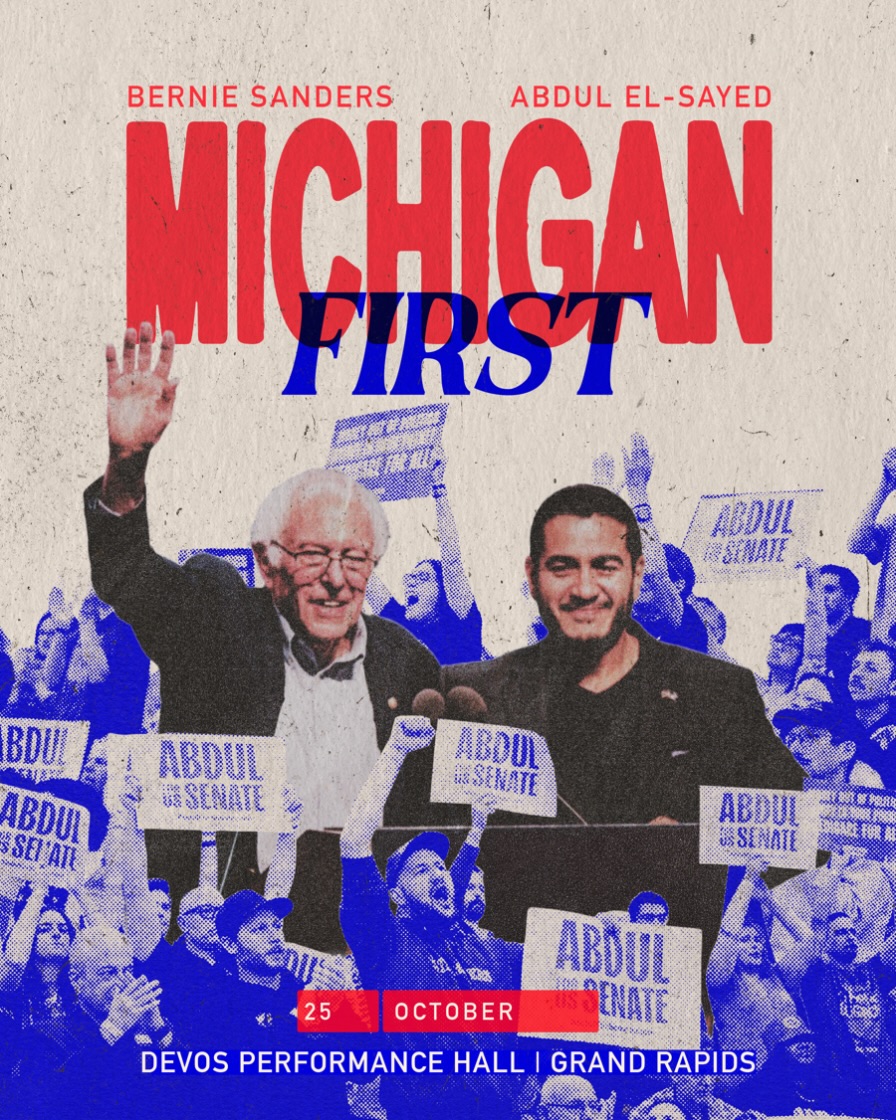
Abdul El-Sayed. In August 2026 he beat the moderate Rep. Haley Stevens by about 15,000 votes, running on Medicare for All and taking money out of politics, despite roughly $70 million in outside spending. His own words: "We took on a machine."
Why El-Sayed matters more than people think
One win can be dismissed. New York is New York, the skeptics said about Mamdani: a unique city, a unique candidate, a lucky moment. Michigan is the answer to that argument. It is a swing state, with an industrial economy and a Senate seat that analysts describe as a must-win for Democrats, against Republican Mike Rogers.
If El-Sayed wins in November, the "isolated phenomenon" story is finished. Mamdani in the country's biggest city and El-Sayed in the Rust Belt would show the same thing in two very different places: voters respond to a plain message about money, power and who pays. That would mean something bigger is happening, and it began with an octogenarian from Vermont.
The loneliest man in the Senate.
In August 2022, during an all-night Senate vote-a-rama on the Inflation Reduction Act, a photographer caught Sanders stretched out alone on the Capitol steps, looking exhausted (refer to the picture below). The photo became a meme. It is also a portrait of his career.
Hours earlier, his amendment to make Medicare pay no more for drugs than the VA does had failed 99-1, with Sanders the lone yes. Most of his other amendments met the same fate, many with only his vote in support. Dental, vision and hearing coverage for Medicare. Stronger drug-price provisions. The expanded child tax credit. Alone, again and again.
Context matters, and it makes the story better, not worse. That 99-1 was a procedural vote, and many Democrats were voting against every amendment to protect a fragile deal. Sanders called the bill nowhere near enough, and then voted for it anyway. The law passed 51-50 and gave Medicare the power to negotiate some drug prices, a win he had spent years demanding.
That is the point.
For decades Sanders was the one senator willing to stand alone on the vote, say what everyone else thought was impossible, and lose. Mamdani, Ocasio-Cortez and El-Sayed are what happens when that stops being lonely.
What Sanders achieved, and what he didn't
His greatest victories were not laws. They were shifts in what counts as normal. Ideas like a $15 minimum wage and more affordable college were once seen as far-fetched and are now part of the political conversation. His pressure even helped push Amazon to raise its minimum wage to $15.
Now the other column. Medicare for All never passed, and even supporters knew Congress was an obstacle. He ended his 2020 campaign after concluding he had no path to beat Biden.
He changed the conversation but rarely got to govern. That is exactly why his successors, who are winning executive and Senate nominations, matter so much.
2016: the race that was never fair.
Here is the part the establishment would like us to forget. Roughly 19,000 leaked DNC emails suggested the party had favored Hillary Clinton, and Sanders said they proved the DNC planned to back her from the start. Some emails showed senior staff mocking his campaign and pushing back on his demands for more debates and an end to superdelegates. And the superdelegates, free to back anyone, largely went with Clinton, while an attempt to abolish them was defeated.
To be precise: Clinton did win more primary votes and more pledged delegates. The argument is not that the count was faked. It is that the terrain was tilted, with insiders picking a favorite long before voters spoke. And the cost of that choice was real: the caution of 2016 led to a Trump presidency anyway. Sanders should have been the nominee. We will never know if he would have won, but we do know the party never let that question be asked on a fair field.
The strongest objections
A serious reader will push back on three points. First, in 2020 Sanders lost a more open race to Biden, which suggests that the party's voters, not only its insiders, were a barrier. Second, wins in a New York primary or a Michigan primary don't prove the platform works across the country. Rogers is already calling El-Sayed an extremist. Third, fact-checkers found that some of Sanders's claims, such as the effect of a national $15 wage, glossed over studies on job losses. The honest answer is that the next test is not loyalty to Bernie. It is winning general elections and delivering results.
But the pattern is hard to deny. The man the party refused to nominate has become the party's biggest source of new leaders. They didn't win by dodging his legacy. They won by embracing it.