
International Cooperation · 13 Nov 2026
Gaza Hospital Bombed as Bibi's Throne Shakes
The Outsider's take
The Outsider · 13 Nov 2026
An Israeli strike tore through the surgical wing of Gaza's Nasser Hospital this week, killing a surgeon who appeared in one of the year's most talked-about documentaries.
It came while Benjamin Netanyahu is a caretaker prime minister, and while his main rival, Gadi Eisenkot, is trying to build a government to replace him.
What happened at Nasser Hospital :
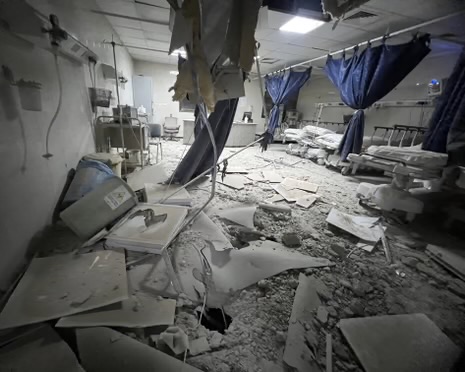
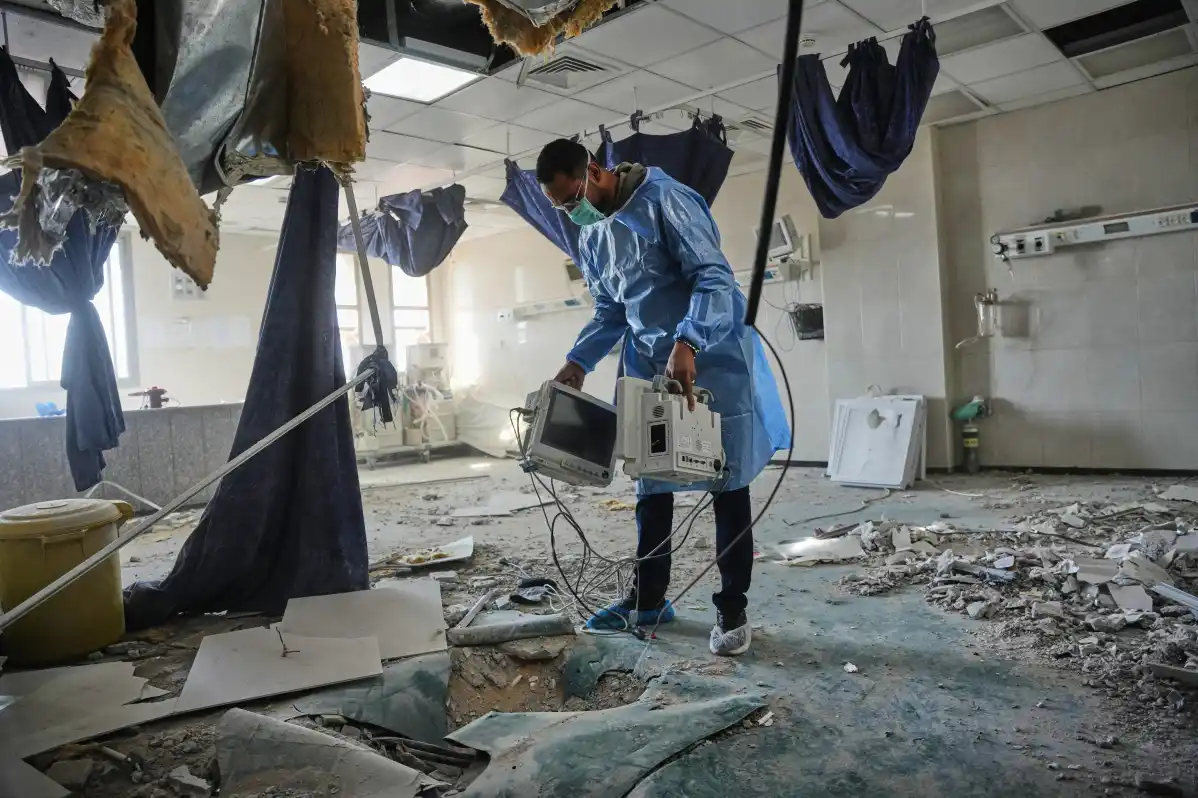
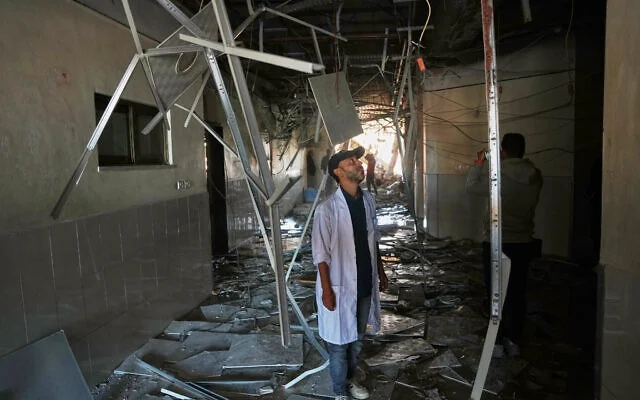
Just after midnight on Thursday 12 November, an Israeli airstrike hit the Nasser Medical Complex in Khan Younis, southern Gaza. A British volunteer surgeon at the hospital said the blast shook the whole building. Gaza's Health Ministry says at least six people were killed. Among them were Dr Rizk Abu Shaira, a general surgeon, and at least two patients, including a 13-year-old boy. Reported injury figures range from about 20 to 28. The World Health Organisation put the number at 27. The strike wrecked the surgical department. Operating theatres, recovery rooms and the intensive care unit were also damaged. Footage from inside shows collapsed ceilings, twisted metal and rubble covering hospital beds and equipment. Work has stopped in several parts of the hospital.
Who was Dr Rizk Abu Shaira?
Colleagues describe Abu Shaira as a prominent and respected surgeon. Reuters reported that he featured in a 2026 documentary. Social media posts identify the film as American Doctor, directed by Poh Si Teng.
The film premiered at the Sundance Film Festival in January and reached US cinemas in August. It follows three American physicians who volunteered in Gaza's hospitals: Mark Perlmutter, a Jewish orthopaedic surgeon; Thaer Ahmad, a Palestinian-American emergency doctor; and Feroze Sidhwa, a trauma surgeon. Abu Shaira was not one of the three. He was one of the Gazan doctors they worked alongside.
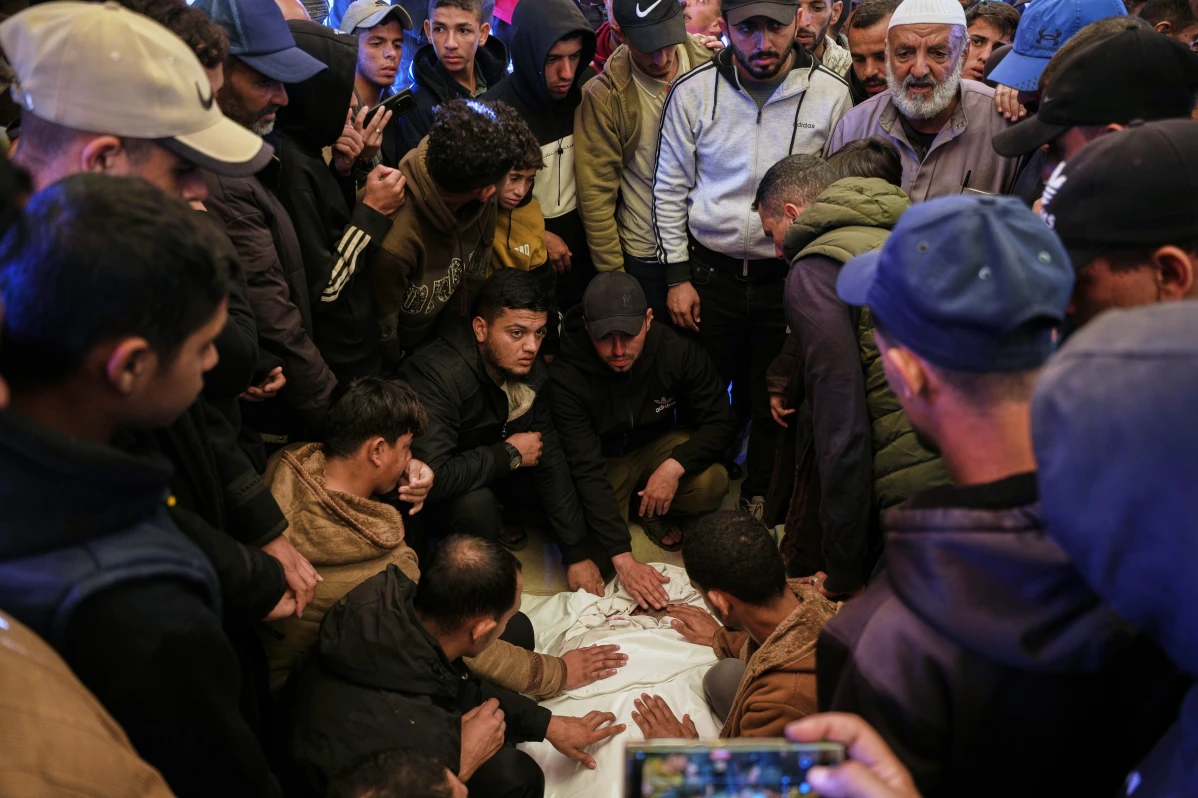
Goher Rahbour, a British surgeon volunteering at Nasser, said he had been operating with Abu Shaira just hours before the strike. He described him as a happy, smiling man. His death puts a face on one of the war's least visible losses. Every surgeon killed in Gaza is a surgeon who can't be replaced quickly in a health system that is already close to collapse.

Two versions of events:
Israel's account: The Israeli military confirmed it carried out the strike. It said it was targeting a senior Hamas commander and other militants operating from the hospital. According to the Associated Press, it gave no evidence, and the commander it named was not among the dead.
The hospital's account: Ayman Abu Obeid, head of surgery at Nasser, said there was no notice or warning before the attack. He rejected the Israeli claim and said there were no armed men or fighters inside the building.
Gaza's Health Ministry called the strike a flagrant violation of international law. A statement linked to President Trump's Comprehensive Peace Plan said the deaths showed why the plan must be implemented without delay. That is a reminder that this strike happened more than a year after a ceasefire was signed in October 2025.
Why "once again" Nasser is one of Gaza's largest hospitals and the only one still standing in Khan Younis. Al Jazeera reports that it serves at least 500,000 people in the south. By Al Jazeera's count, this was the seventh time Israel has struck the complex in the past couple of years.
The deadliest earlier attack was on 25 August 2025. A "double-tap" strike hit the hospital twice: the second blast came as rescuers and journalists arrived, and 22 people were killed, including five journalists.
Meanwhile in Israel: Netanyahu's grip slips
The strike lands at an unusual political moment. Israel voted on 27 October 2026, and the result was a deadlock. Netanyahu's bloc won 53 seats, and his Likud party is still the biggest single party with 27. The opposition bloc won 48: Eisenkot's new Yashar party took 21, Naftali Bennett and Yair Lapid's B'Yachad 12, Yair Golan's Democrats 8 and Avigdor Liberman's Yisrael Beytenu 7. Arab-led parties won a record 19 seats, with 12 for the Joint List and 7 for Ra'am.
A majority needs 61 of the Knesset's 120 seats, and neither bloc has it on its own. Netanyahu's outgoing coalition lost 11 seats. Turnout was about 78%.
The president picks Netanyahu's rival
After consulting every party, President Isaac Herzog reported that MKs representing 67 seats had recommended Eisenkot and only 46 had backed Netanyahu. Two things made the difference. The Arab parties recommended Eisenkot, and the ultra-Orthodox United Torah Judaism refused to endorse Netanyahu, its long-time ally.
Herzog announced his choice on Saturday 7 November and formally gave Eisenkot the mandate the next day. Axios called it the closest Netanyahu has come to losing power since 2021.
Eisenkot has 28 days to build a coalition, and the president can extend that by 14 days. If he fails, Netanyahu would probably get his own chance. If both fail, Israel goes back to the polls, likely in early spring. That would be another election in a country that held five in under four years between 2019 and 2022.
Who is Gadi Eisenkot?
Eisenkot is a former chief of staff of the Israeli army. After the 7 October 2023 attacks he joined Netanyahu's emergency war cabinet, and he later left it. His son was killed fighting in Gaza, and Herzog referred to that loss when he handed him the mandate.
He is not a dove. He calls what he is building a "national emergency government" and has set four conditions for anyone who joins it: accepting Israel as a Jewish and democratic state, upholding the values of the Declaration of Independence, mandatory national service for everyone, and recognising Hamas as a terrorist organisation. He has even said Netanyahu and the far-right finance minister Bezalel Smotrich could join if they accept those terms.
Why forming a government is so hard
Eisenkot's arithmetic doesn't add up yet.
The first problem is the Arab parties. Eisenkot has ruled out bringing them into his coalition. They say they won't join while the occupation of the West Bank continues, but they could vote with him from outside, which would allow a "minority government".
That creates a second problem. Liberman's Yisrael Beytenu endorsed Eisenkot but says it won't sit in a government that relies on Arab parties. So Eisenkot's team is also exploring a deal with the ultra-Orthodox United Torah Judaism, with Ra'am possibly abstaining in a confidence vote. Golan's Democrats prefer the minority-government route instead, and Israeli media report doubts about how committed Bennett is to either path.
Netanyahu, meanwhile, is fighting back. He has called for a unity government with himself at its head, and he has attacked the Arab parties, falsely claiming they want to destroy Israel. Eisenkot dismissed the appeal as political spin.
The new Knesset has already been sworn in. Moments after it opened, Eisenkot's allies submitted a bill to set up a state commission of inquiry into the 7 October attacks. Netanyahu has largely opposed such a commission.
Why the two stories are connected
Until a new government is sworn in, Netanyahu remains caretaker prime minister and is still in charge of military decisions, including strikes like the one on Nasser. Eisenkot has made that point himself, arguing that a caretaker prime minister who has lost the public's trust shouldn't keep running the security system "even for one more day".
The two men also disagree on Iran. During the campaign, Netanyahu promised to resume the offensive against Tehran. Eisenkot questioned the need for another military campaign.
That doesn't mean a change at the top would end strikes on Gaza. Eisenkot helped run the war, and his conditions for coalition partners are firmly security-first. But who governs Israel will shape how the next phase of the Gaza conflict is handled, and the deadline is 20 December.
Our view: the world's silence is the scandal
Let's be honest about what happened here. A bomb hit the surgery ward of a hospital in the middle of the night. A doctor died. A 13-year-old boy who was there to get better died. And the world barely looked up.
In August 2025, when Nasser was hit before, there was at least some noise. UN chief Antonio Guterres strongly condemned it and called for an impartial investigation. The UK, France, Germany and Canada spoke out too. The UK's foreign secretary at the time said he was "horrified".
This time? The UN said it was "deeply alarmed". When a journalist asked why neither Guterres nor the WHO had used the word "condemn", the UN spokesperson said that if the word had magic powers to stop the fighting, they would use it more often. The WHO's chief said hospitals are lifelines that must never be attacked. Turkey called it a grave violation of international law. When we went to press, we couldn't find a single statement from Washington, London, Paris or Berlin.
That isn't good enough. Here's why:
Hospitals are protected, full stop. Under international humanitarian law, hospitals and medical staff must be protected, and they must not be used for military purposes either. If Israel believes fighters were inside, the burden is on Israel to show the evidence. It hasn't.
This is also not a one-off. Since October 2023, the WHO has recorded more than 1,000 attacks on healthcare in Gaza. When something happens a thousand times, silence starts to look like permission.
And there is supposed to be a ceasefire. A truce was signed in October 2025, and the UN itself warns that rising military operations are putting it at risk. If world leaders go quiet now, what was
the ceasefire worth?
In the end, silence is a choice. Governments that rush to comment on every other crisis can find the words for this one. Not speaking up is also a message, and the people of Khan Younis can hear it.
Israel says it was targeting a Hamas commander, and Hamas denies using the hospital. That is exactly why an independent investigation matters. You can't settle a dispute like this with press releases. If you're reading this and you're angry, good. Share the facts, not just the outrage. Ask your MP or representative what your government said about Nasser Hospital, and if the answer is "nothing", ask why.
What to watch
The big date is 20 December, Eisenkot's first deadline, which can be extended by two weeks. Before then, watch whether United Torah Judaism really crosses over to Eisenkot, and whether the Arab parties agree to back a minority government from outside. And on Gaza, watch whether any independent inquiry ever tests Israel's claim that militants were inside Nasser Hospital.