
Breaking · 10 Oct 2026
Kabila Breaks Silence as Congo's Term-Limit Crisis Intensifies
The Outsider's take
The Outsider, Analysis / 10 October 2026
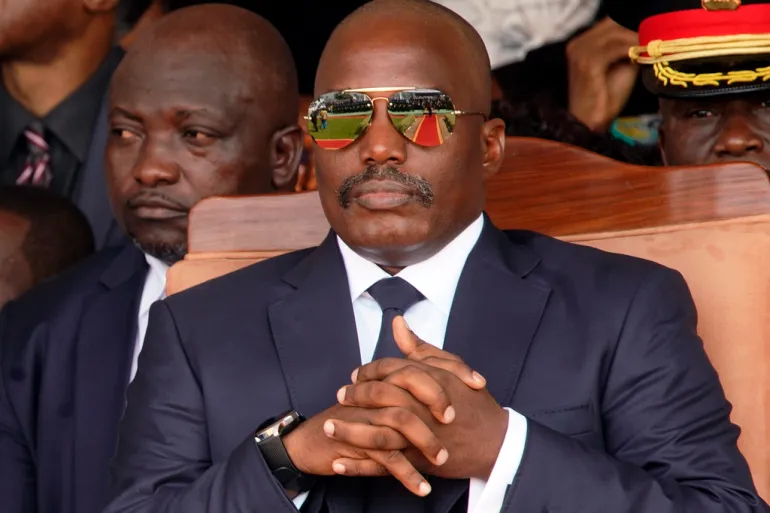
Joseph Kabila, the former president sentenced to death in absentia last year, delivered a fiery new speech on 9 October through his political platform, Reconstruire RDC. He accuses President Félix Tshisekedi's government of sliding into authoritarianism and warns that Congo is on the brink of collapse. The address comes at a critical moment: the country remains divided over a proposed constitutional change, while grappling with a brutal war in the east, a deadly Ebola outbreak and deep-rooted corruption.
What Kabila Said
Kabila claims that the proposals he made in a 2025 speech were completely ignored. He accuses the government of stoking violence by prolonging the war, collaborating with armed groups and blocking meaningful national dialogue. He paints a grim picture of corruption, arbitrary arrests and a staggering public debt exceeding $18 billion.
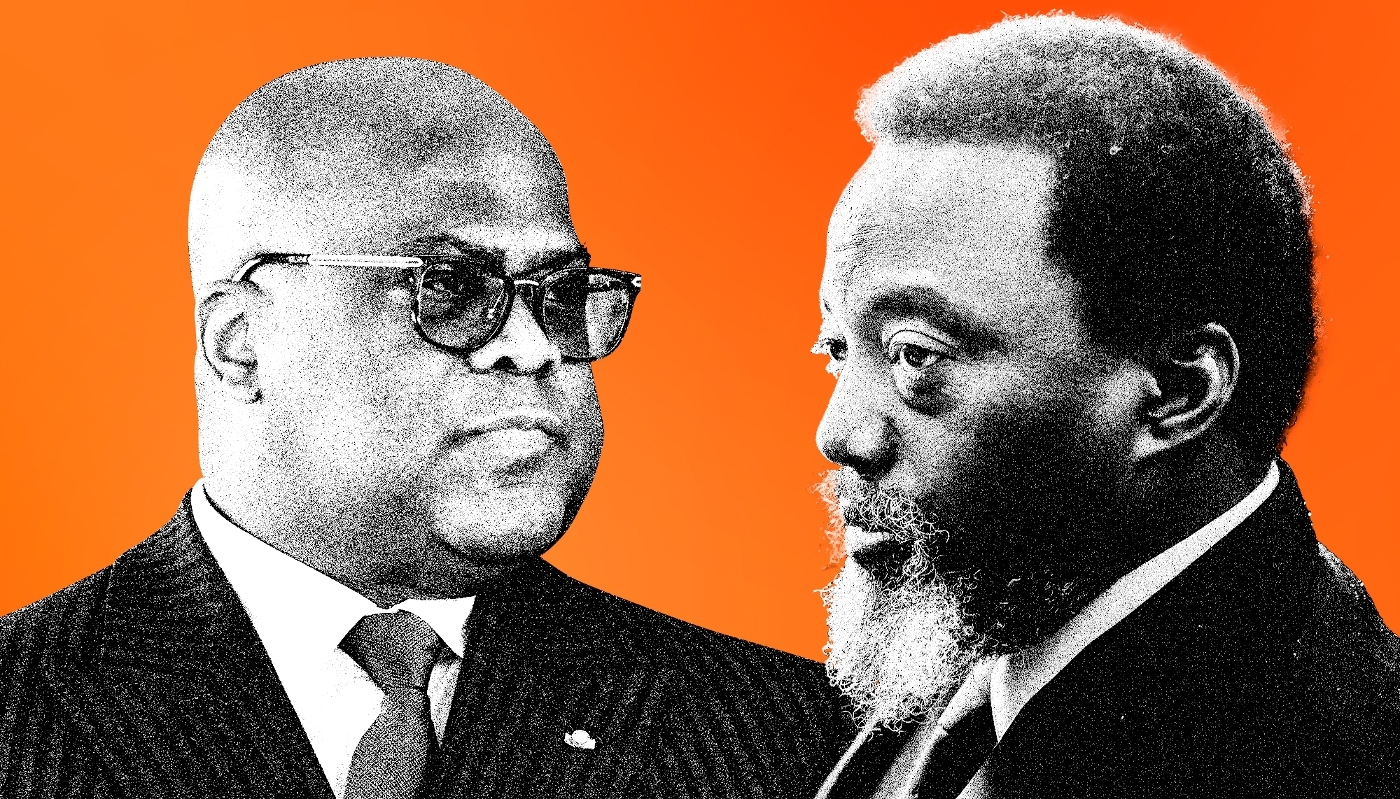
His words about Tshisekedi are particularly harsh. Kabila states that the country no longer functions as a republic, let alone a true democracy, and describes the president as a "reincarnation of Ivan the Terrible", accusing him of treating Congo as personal property and its people as subjects to be taxed and exploited. He promises to reveal his vision for change in the coming weeks.
The Constitutional Clash
The Democratic Republic of Congo's constitution limits presidents to two five-year terms. Tshisekedi was elected in December 2018 and re-elected in 2023, with his second term ending in 2028. Recently, he suggested he might run again if the people want him to. Meanwhile, parliament passed a bill in June that could allow constitutional changes via referendum.
Critics, led by the Coalition Article 64, which includes Martin Fayulu and Moïse Katumbi, argue that these moves are designed to erase term limits. They point to the sequence of events: Tshisekedi's remarks, the referendum law, and the ruling coalition's support for amendments that could extend his rule. Despite his 2023 "landslide victory", opposition voices remain strong, and the government has yet to clarify which changes are in the pipeline. It claims the referendum is simply a way for the people to voice their opinion.
Protests and Government Responses
On 12 June, security forces violently dispersed a sit-in outside parliament. Reports describe tear gas, live ammunition and gunfire; opposition politician Delly Sesanga was reportedly shot in the leg. The government declined to comment on the use of live rounds.
On 15 September, the coalition organised marches across several cities. In Lubumbashi and Likasi, authorities detained more than 30 protesters, with opposition sources putting the figure closer to 80. Tragically, a security officer guarding opposition figure Prince Epenge died in a Kinshasa hospital. Police denied reports of arrests during peaceful protests, while Fayulu accused police of protecting pro-government youth groups. Clashes between opposition and government supporters erupted in Kinshasa.
The Call for National Dialogue
Earlier, Tshisekedi announced a national dialogue involving opposition groups, civil society and religious leaders, but excluding rebels such as the M23. Critics in the Coalition Article 64 argued it was a move to entrench his power. It is important to note that the dialogue plan excluded former president Joseph Kabila and his party, the PPRD.
The Fight Against Corruption
Corruption remains at the heart of Congo's woes. Tshisekedi promised to dismantle the corrupt system upon taking office. Transparency International's rankings show little progress, with an index score of 18 in 2019 rising slightly to 20 in 2023, indicating that perceptions of corruption remain stubbornly high.
On national debt, estimates vary. Kabila's address cites figures that cannot be independently verified. Past assessments put debt at nearly $10 billion in 2022, owed primarily to external creditors and incurred for infrastructure and state enterprises. IMF data suggests debt remains manageable at around 20% of GDP in 2025, though the actual figures are unclear.
US Minerals Deal Sparks Controversy
Kabila also challenges a strategic partnership agreement signed with Washington in December 2025, amid ongoing peace talks involving Rwanda. The deal grants the US greater access to Congo's critical minerals in exchange for investment and security cooperation. Kabila criticises the government for believing the deal guarantees unconditional US support. Having led the country for 18 years and worked with multiple US administrations, he argues that such agreements are between states, and that selling off Congo's minerals risks sacrificing the nation's independence. Although he does not call for cancelling the deal, its critics fear it heavily favours US interests.
The deal has faced legal challenges and opposition. Human rights groups and lawyers argue that it is unconstitutional and that its terms heavily favour the US, providing little tangible benefit to Congo. The government defends it as within constitutional bounds and highlights ongoing efforts to diversify international partnerships.
The Wider Crisis
The eastern conflict continues to destabilise the region. The M23 rebel group controls large swathes of North and South Kivu, including the key towns of Goma and Bukavu, which remain cut off from aid routes. Rwanda denies backing the rebels, but UN experts suggest otherwise. Meanwhile, a deadly Ebola outbreak, caused by the Bundibugyo strain, has surpassed 5,000 cases and prompted the WHO to declare an international emergency, complicating relief efforts amid ongoing violence.
The Case Against Kabila
In September 2025, a military court in Kinshasa sentenced Kabila to death in absentia for treason and crimes against humanity, charges linked to alleged support for the M23. Kabila, who denies these accusations, dismisses the courts as political tools. Tshisekedi has accused him of backing the rebels, and authorities have moved to suspend his party and seize his assets. Many observers see this as an attempt to block his influence and prevent a united opposition.
Kabila's Legacy
Joseph Kabila led Congo from 2001 to 2019. When he took office in January 2001, after his father's assassination, he inherited a country torn apart by the Second Congo War, divided between government and foreign-backed rebel zones, with millions dead and the economy in collapse. Despite his youth and limited experience, he reopened dialogue with neighbouring countries and rebel groups, securing the 2002 agreements that led to the withdrawal of foreign troops. This paved the way for a 2003 power-sharing government, a new constitution and the 2006 elections, the first multiparty vote in over four decades. He also restored ties with international donors and signed the 2007-08 infrastructure-for-minerals deal with China. In 2010, under Prime Minister Adolphe Muzito and with Finance Minister Augustin Matata Ponyo leading negotiations with the IMF and the World Bank, the country secured the cancellation of roughly $12 billion of its external debt. Matata Ponyo later became prime minister (2012-2016) and oversaw a period of macroeconomic stabilisation, with falling inflation and strong growth. Kabila's legacy remains contested, however: conflict persisted in the east, corruption endured, and his delay in leaving office after 2016 sparked deadly protests. In January 2019, he finally handed power to Félix Tshisekedi, marking the first peaceful transfer of power in the country's history since independence in 1960. More recently, in May 2025, he appeared in an M23-controlled area, meeting with religious leaders amid ongoing tensions.
What to Watch
The coming weeks will reveal whether Kabila's platform translates into a concrete programme and organisation. Watch how the government responds, whether the referendum proceeds, and whether the opposition coalition remains united.