
Politics · 12 Oct 2026
Joseph Kabila Takes Up Arms, the Front for the Refoundation of the Nation (FRN).


The Outsider's take
The Outsider /Update of the previous article: “Kabila returns to the microphone”
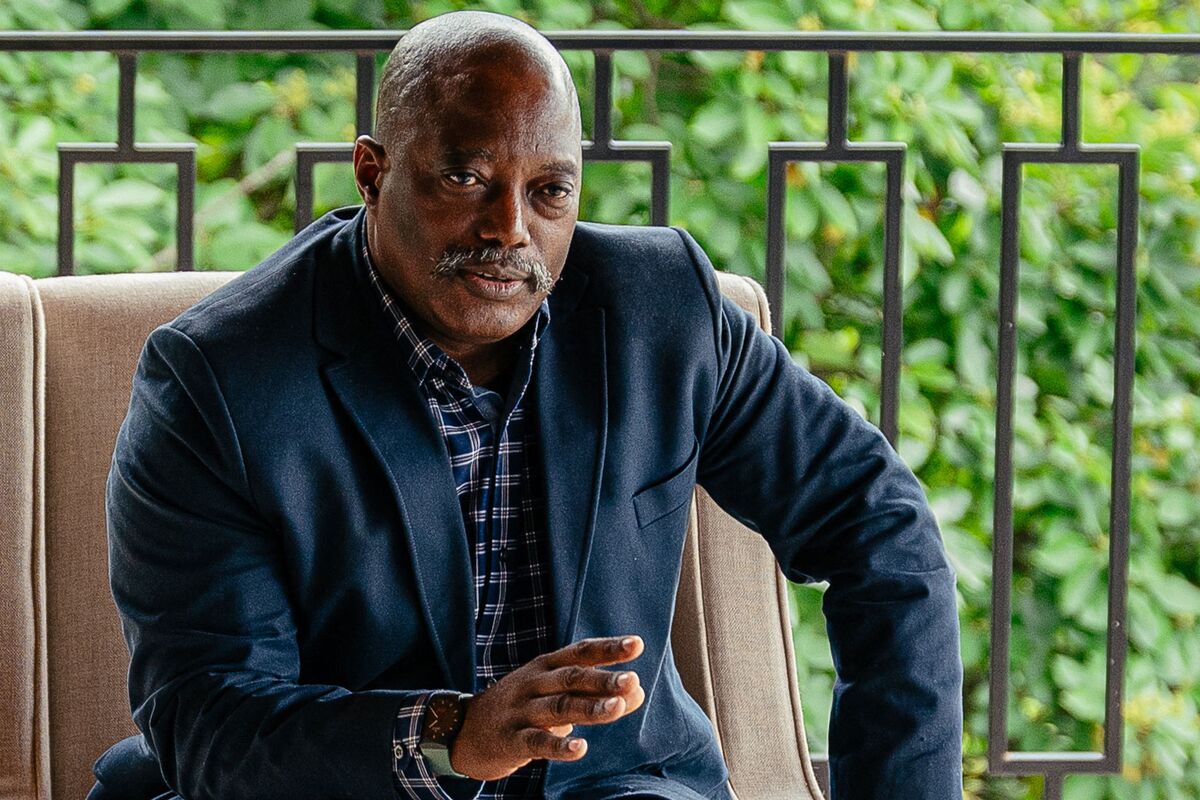
The former president now heads a politico-military movement: the Front for the Refoundation of the Nation (FRN). For 18 years he ruled the Democratic Republic of Congo. Now Joseph Kabila is at the head of a movement with an army general in its command.
The Outsider has confirmed through its own sources that Kabila officially leads the Front for the Refoundation of the Nation (FRN). Beside him are Bertrand Bisimwa (First Vice-President) and Corneille Nanga (Second Vice-President), both linked to M23/AFC, along with Gen. Sultani Makenga, M23's military commander, appointed chief of staff with the rank of vice-president. Freddy Kaniki is Secretary General, Benjamin Mbonimpa is Deputy Secretary General, and Désiré Rukomera is the Permanent Secretary of the founders' college. Kinshasa has yet to respond to this announcement.
How we arrived here
The journey has been swift. In May 2025, Kabila called for a "citizen pact" to refound the State. In October 2025, a Nairobi conclave established the "Mouvement Sauvons la RDC," with him as president. A Kinshasa military court then sentenced him to death in absentia for treason and war crimes, a ruling he dismisses as political. The government dismissed his Nairobi meeting as a "non-event" and accused its organisers of attempting to destabilise the country.
This announcement marks a different step: a platform that now includes an armed command.
Why now?
Four perspectives:
The constitution:
Kabila's supporters accuse the government of breaching it and cite efforts to revise it. Advocates for revision believe the document needs updating. Critics fear it could prolong the president's tenure. Kabila himself faced similar accusations in 2016.
Ethnicity and exclusion:
Opposition voices accuse the government of favouritism and tribalism in appointments and security, with M23 presenting itself as a response to the marginalisation of Rwandophone communities. The government denies this and claims ethnic arguments are exploited to justify externally backed groups.
A nation at war:
The conflict in the east, displacement, and weak state authority provide the backdrop. Supporters blame government failure, while the government counters foreign interference and claims Kabila's ties to M23 aid the aggressor.
Survival:
Sceptics argue that with a death sentence hanging over him, an armed alliance is Kabila's only route back to power or safety. His supporters claim the sentence is a political score-settling.
Each side's interpretation of his motives serves its own interests. Consider them carefully.
History observing
In 1996, Kabila's father, Laurent-Désiré, led the AFDL rebellion that ousted Mobutu in 1997, with significant Rwandan and Ugandan support. The alliance fractured within a year, leading to the Second Congo War, which resulted in millions of deaths.
Some see a reflection of history today. Others argue that the actors and context have shifted, with Joseph Kabila as a former head of state, not an outsider confronting a long-standing dictator; we all remember that he took the city of Kisangani from the regime of Mobutu. History offers a point of reference, not a prophecy.
The Katanga situation
Then there's Katanga, the copper-and-cobalt heartland powering batteries worldwide. It is widely perceived as Kabila's stronghold, and his father is linked to Katangese identity. However, measuring his popularity there is challenging without credible polling, especially since the old province was divided in 2015, and rivals such as Moïse Katumbi compete for allegiance. Katanga's secession in 1960 also makes many Congolese wary of anything resembling a threat to national unity.
Whether the FRN seeks to mobilise this base, and how Kinshasa responds, could determine how far the movement advances.
Key points to monitor :
Does the FRN replace, absorb, or exist alongside the Nairobi movement?
Does it have a genuine programme, including a transition, elections, and constitutional guarantees?
Will it participate in the inclusive dialogue promoted by the CENCO and ECC churches?
How will Kinshasa, the African Union, and international partners react?
Why it matters
A former president, an armed movement, and a platform claiming to represent the nation are converging on the DRC's most sensitive issues: legitimacy, security, and sovereignty. Regardless of opinions about the actors, the outcome will influence the country's trajectory and the safety of millions.
The Outsider will continue to follow the situation and update it as new details emerge.