
World · 1 day ago
Suneung: The Exam That Stops South Korea and the AI That Broke It
The Outsider's take
A confession on YouTube, a death in Seoul, and half a million students sitting the Suneung under emergency rules. South Korea's AI cheating scandal is a warning for everyone.
The Outsider · World · 22 November 2026
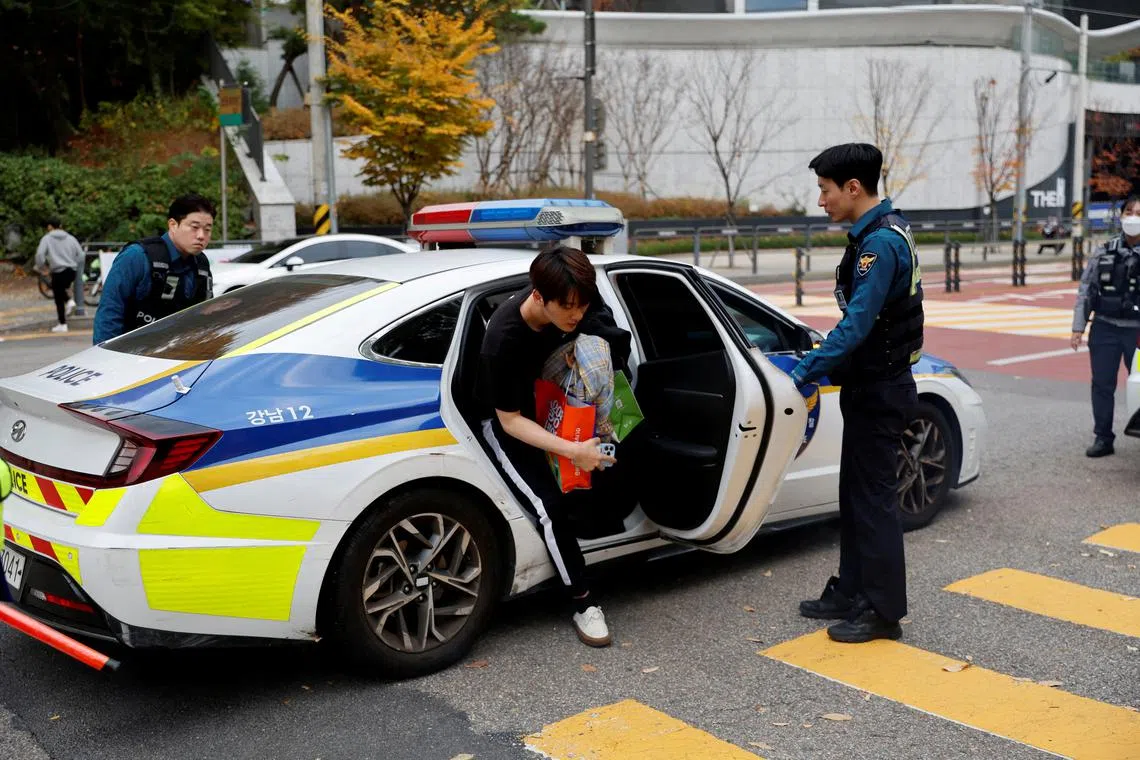
On Thursday 19 November, South Korea did what it does every year. Planes were held on the ground so no engine noise would reach the exam halls. The stock market opened an hour late. Police cars rushed late students to their test centres. Over 550,000 people had registered for the Suneung, the national university entrance exam, which runs for about nine hours in a single day.
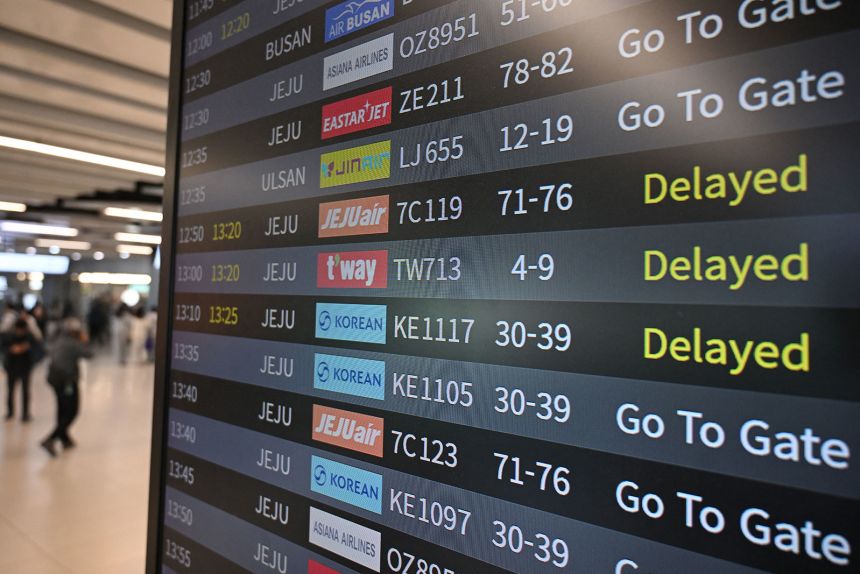
This year, though, something else hung over the halls: fear of artificial intelligence. Wi-Fi was cut around exam sites. The number of supervisors was doubled. Students could bring only pencils, and test centres handed out the erasers so that nobody could hide a device inside one. Phones across the country buzzed with surprise emergency alerts during the exam, a trap meant to expose smartphones smuggled into the room.
How did a country famous for its exam discipline end up here? It took one week, one YouTube video, and one tragedy.
The video that started it all:
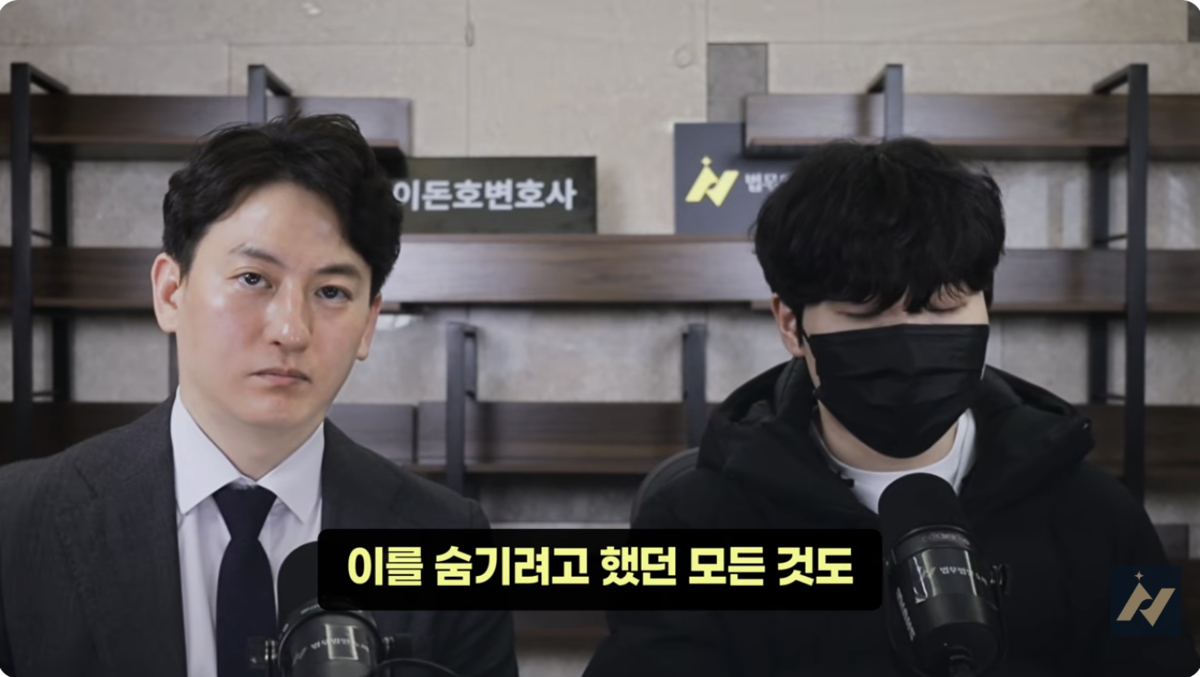
On Sunday 15 November, a man in a face mask appeared on his lawyer's YouTube channel. He was Han Won-seok, 34, and he had come first in this year's national tax accountant exam, one of Korea's toughest professional qualifications. (He is not a Suneung student. His case is about a professional licence, but it set off the panic around the university exam.)
His scores had already looked impossible. Across four subjects he missed one question out of 160. In tax law he got a perfect 100. The 16,856 people who sat that paper averaged about 30, and nobody else scored above 90.
In the video, Han admitted how he did it. "I cheated by taking photos of the questions with a micro-camera during the test," he said. The pictures went to a generative AI tool, and the answers came back to a smartphone he could read. He also admitted using the same method on a separate certified public accountant exam. He apologised to the other candidates and handed a written confession to Seoul police.
His lawyer refused to explain how the equipment got past the proctors, out of fear that others would copy it. That fear was justified. Within days, social media posts were advertising cheap cheating kits: a micro-camera for about 50,000 won (around £27), plus a tiny earpiece.
The agency that runs the exam says it will cancel his score and file a criminal complaint against him. Thousands of honest candidates are furious, and some are asking for the whole exam to be held again. One candidate told the JoongAng Daily: "Since the fairness of the exam has collapsed, a retest should be held."
Suspicion becomes a hunt, and a man dies:
Once one top scorer had confessed, every top scorer became a suspect.
Lee Jin-woo, 32, a dental student at Seoul National University, had earned a perfect score on the law school admission test. Online, people began to ask whether his result was also too good to be true. They pointed to how sharply his grades had risen since his school years. Two lawyers filed complaints, and police opened an inquiry.
Lee denied cheating. To prove it, he promised to livestream himself sitting the Korean-language section of this year's Suneung on the day of the exam.
He never showed up. That Thursday, police found him dead in Seoul, and they are treating his death as a suspected suicide. No cheating by Lee has ever been proven. Korean media report that the investigation is expected to close without charges.
Whatever the truth about his test score, the speed of what happened should frighten us. In four days a man went from being suspected to being publicly accused to being gone. AI did not only make cheating easier. It made brilliance look suspicious. When a machine can produce a perfect score, a perfect score stops proving anything, and the crowd fills the gap with accusations.
If this story affects you, or you are struggling, please talk to someone. In the UK and Ireland, call Samaritans free on 116 123. In South Korea, call 109. Elsewhere, contact your local emergency number or a crisis line.
The government's response: zero tolerance:
Seoul moved fast, and hard.
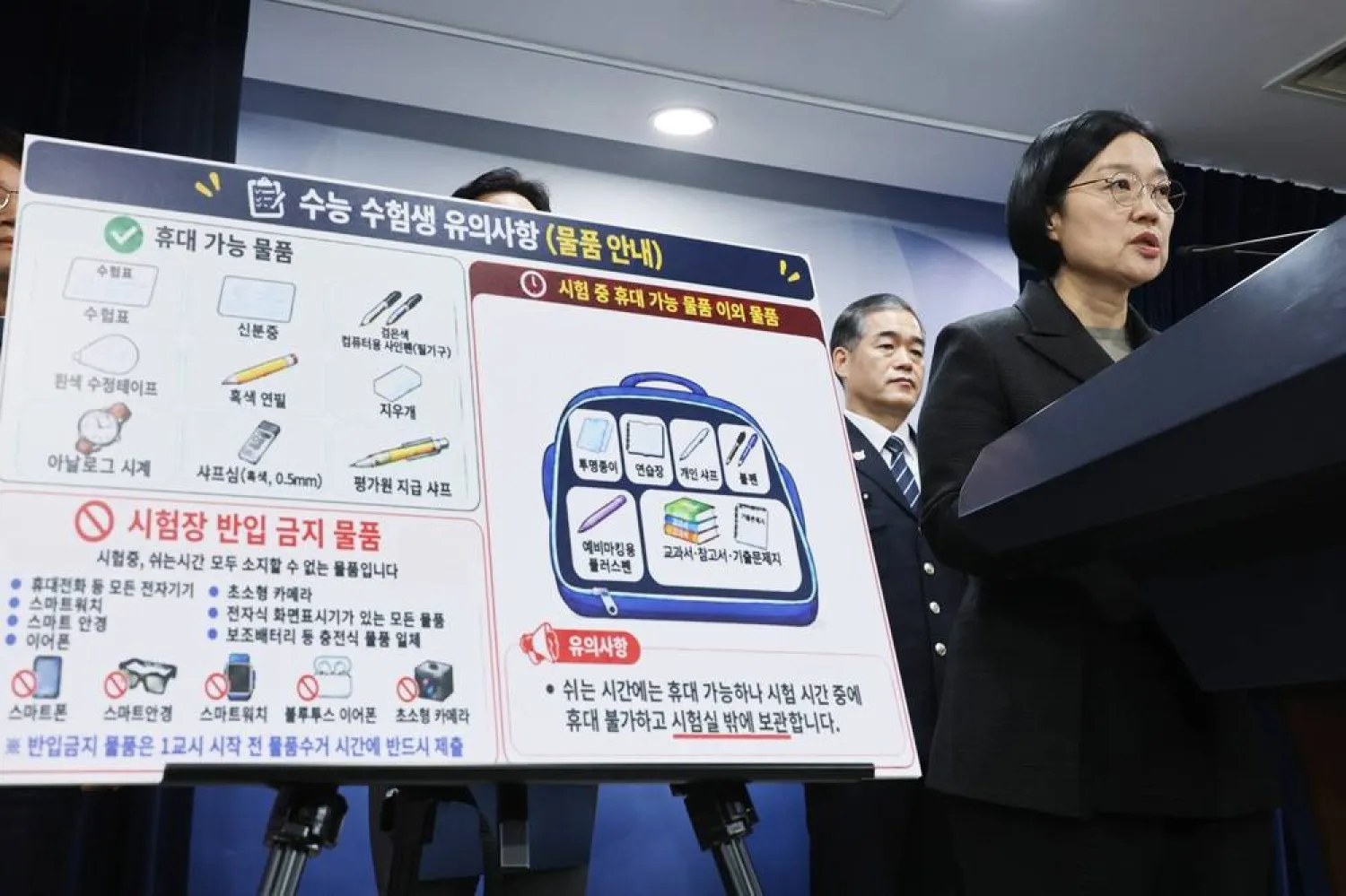
The pressure was building even before the confession. President Lee Jae-myung had already ordered measures against cheating with smart devices on 5 November. After Han's video, the prime minister ordered stricter rules on handing in devices and a review of Wi-Fi shutdowns at test sites.
On the day itself, Seoul sent 239 specially trained inspectors to check glasses for hidden cameras across all 1,312 test centres. Whistleblowers were offered rewards of about $75,000. Phones went off with surprise alarms during the exam, and only pencils were allowed on the desk.
The penalties are getting heavier too. The government wants to raise the Suneung ban for cheaters from one year to ten, and serious cases involving smart devices will go to the police. The ruling Democratic Party says it will write the 10-year ban into law. The prime minister has promised to treat AI cheating as a "social evil".
Seoul is also looking back. Every national qualification exam held this year is now under review. The prime minister ordered last year's Suneung papers to be kept for investigation instead of being destroyed as usual.
The result: 98 test-takers were caught cheating on 19 November, according to the Education Ministry.
Critics say the response is a few gadget checks too late. Teachers warn that you cannot catch AI glasses just by looking at them, because they look exactly like the frames people need to see. Researchers in Australia have a name for bans that cannot be enforced: an "enforcement illusion".
Why one exam can decide a life:
To understand why someone would risk prison for a test score, you have to understand what the score means in Korea.
The Suneung is widely seen as the gateway to the best universities. Those lead to the best-paid jobs, and in many families they shape even your marriage prospects. One morning can sort a whole generation.
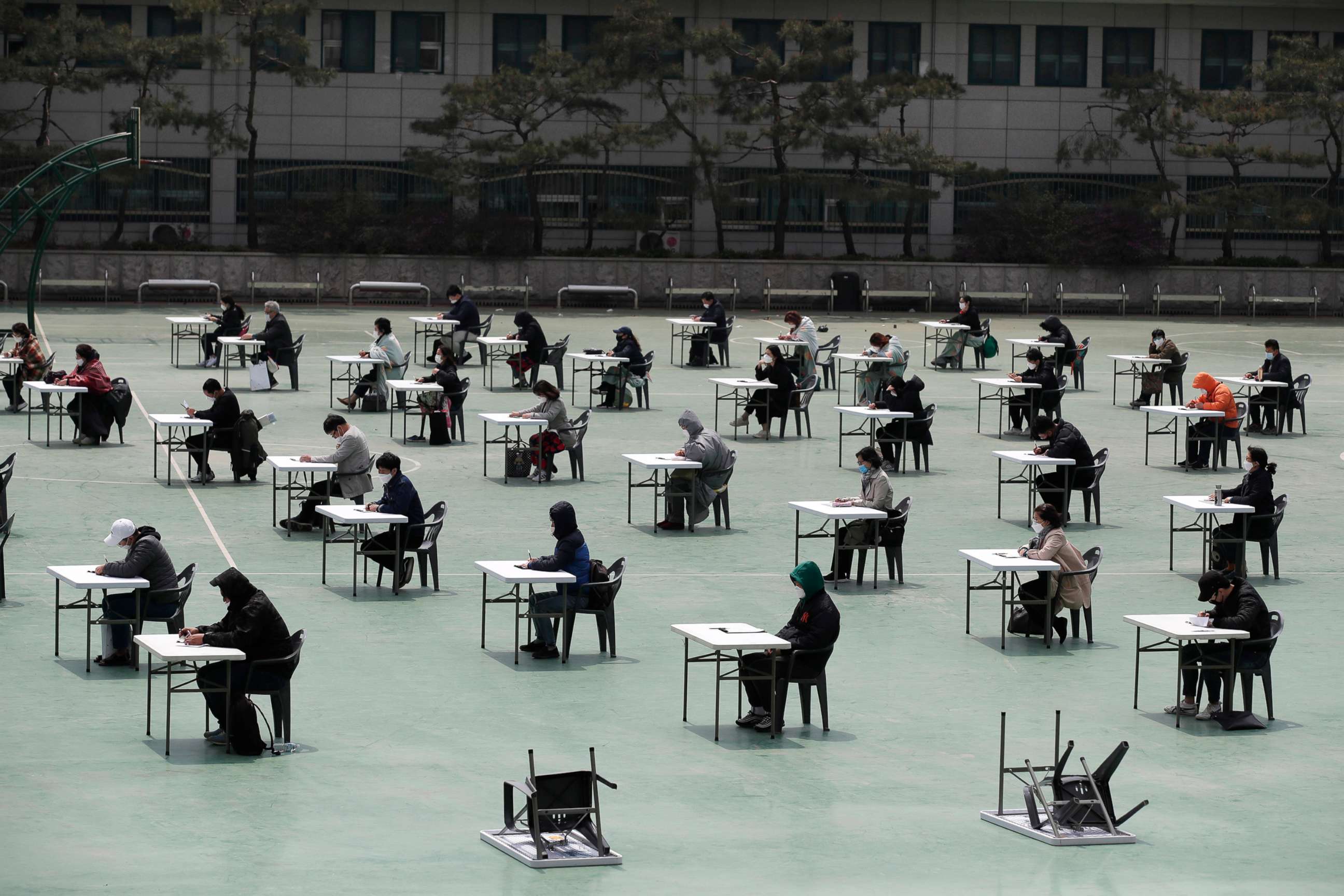
Families pay heavily for that morning. In 2024, Korean households spent a record 29.2 trillion won (about £16 billion) on private tutoring and cram schools, known as hagwon. Spending has risen by around 60% in a decade, even though there are fewer children. For students who attend them, the average is now over 600,000 won a month. Children study late into the night for years, all aimed at a single day.
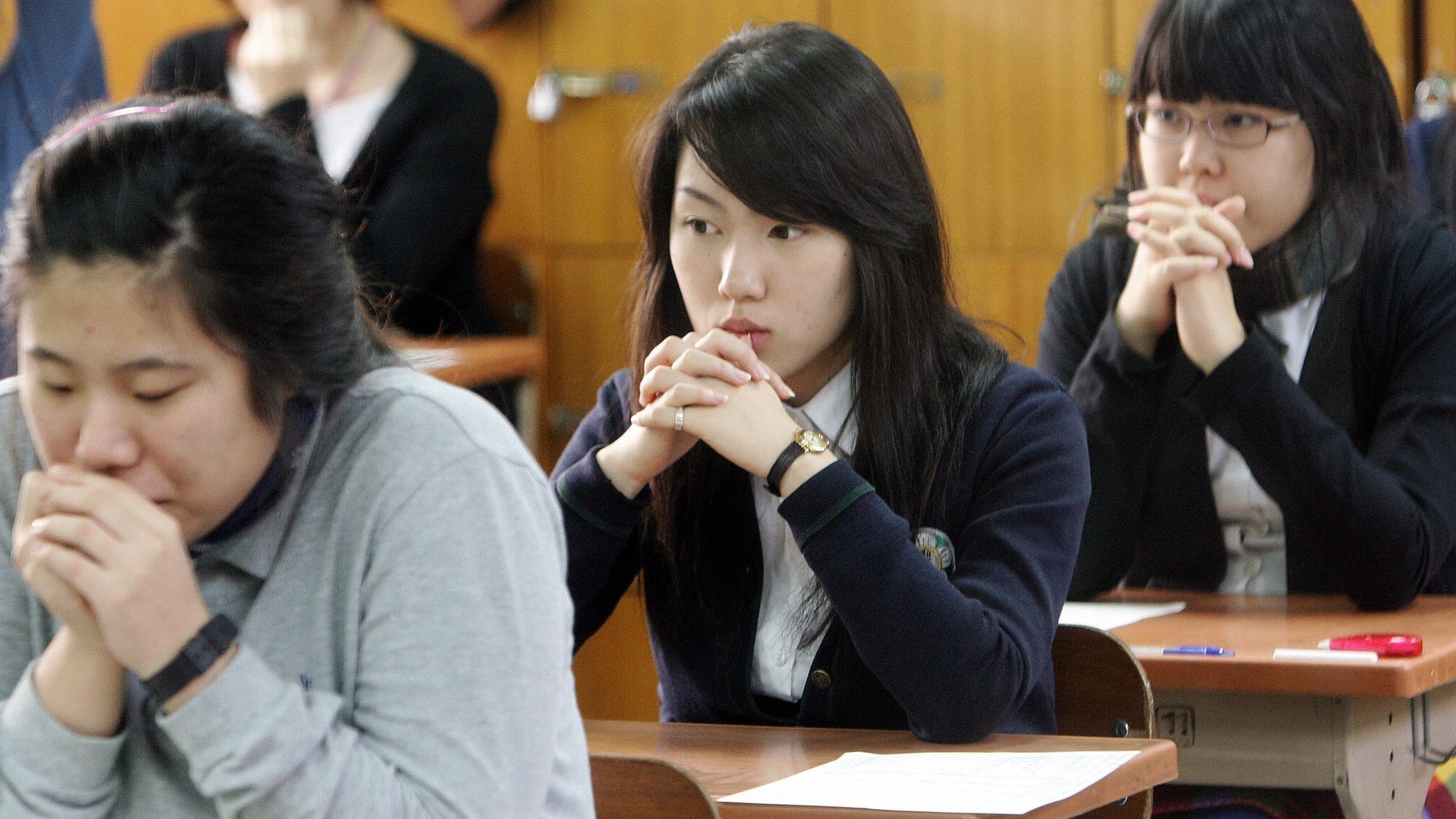
That pressure has a human cost. South Korea has long had one of the highest suicide rates in the OECD, and academic stress is often named as a factor. When years of sacrifice come down to one score, the temptation to cheat grows. So does the fear of being accused.
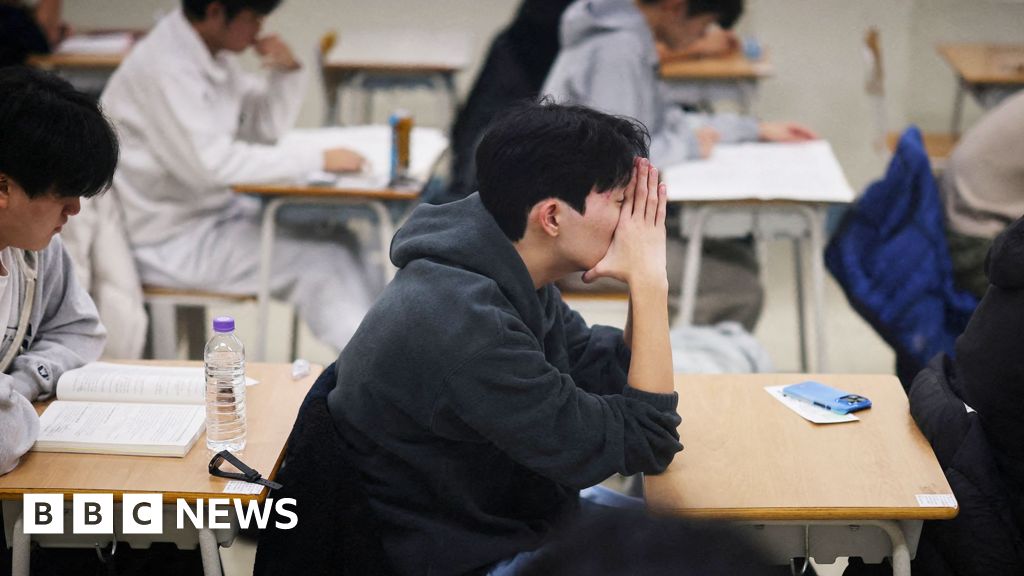
Some in Korea now say the system itself has to change. The scandal has given new energy to proposals to phase out the Suneung by 2040. In an odd twist, Korea also plans to start using AI to help write and review Suneung questions in a 2028 pilot.
This is coming for the rest of the world:
It would be comforting to see this as a story about Korea's unusual exam culture. It isn't.
In Taiwan, an applicant to a top medical school was caught wearing smart glasses after inspectors noticed the frame was giving off heat. In New Zealand, the University of Auckland disciplined a student who brought AI glasses into a test.
The UK is not immune either. England's exam regulator recorded 2,225 cases involving phones and smart devices in one exam season. A Guardian investigation found almost 7,000 proven cases of AI cheating at UK universities in 2023–24. The Office for Students has called AI "a generational risk to the system as it stands."
The working world is reacting as well. The ACCA, the world's largest accounting body, is scrapping remote exams because cheaters are "outpacing" its safeguards. Google and McKinsey are dropping remote interviews for the same reason. In the US, a Brown University economics professor moved his final exam from take-home to in-person after suspecting AI use, and the class average fell from 96 to 48.
The technology is getting cheaper and harder to see. In a controlled test at the Hong Kong University of Science and Technology, answers produced through a pair of AI glasses scored 92.5% on an undergraduate exam. Meta's AI glasses went on sale in Korea in May, and more brands are on the way.
Korea is simply where the pressure is highest, so it broke there first. Any country that uses one high-stakes exam to decide a young person's future is exposed in the same way. That includes A-levels, the baccalauréat, the Exetat, the gaokao and the bar exam.
The real question:
Governments can collect phones, cut Wi-Fi and inspect every pair of glasses. They will keep doing it, and the cheaters will keep adapting.
The harder question for our generation is this: if a machine can answer the exam, what is the exam actually measuring? For decades we have trusted a single score to stand for talent, effort and potential. AI has broken that trust. In Seoul this month, it cost one man his career, and another, who was never proven guilty of anything, his life.
The world can keep building higher walls around the exam hall. Or it can start asking whether one day, one score and one room should ever decide who we become.