
Business /Economy · 3 Oct 2026
$5,000 for Your Vote? The $1.2 Trillion Question and the Cheque That May Never Arrive


The Outsider's take
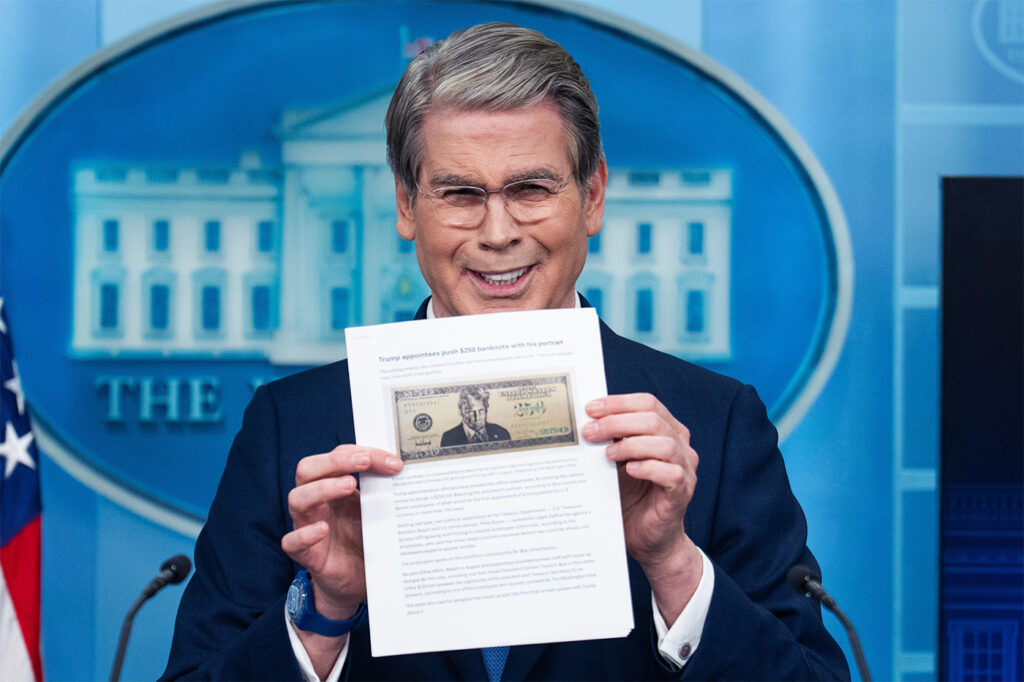
Imagine a head of state in any other country telling voters: " Vote for my party and I'll give you $5,000. Western commentators would dismiss it as blatant vote-buying. But in Washington, at the Republican midterm convention in Dallas, President Donald Trump did exactly that. Today, he posted a video on X, which quickly racked up 8 million views, promising that if Republicans take both the House and Senate, "all adult citizens" will receive $5,000. This audacious claim deserves a closer look for three critical reasons.
First, the math simply doesn’t add up. With roughly 245 million adult Americans, a $5,000 payout would total about $1.2 trillion, equivalent to the entire annual federal budget from nonpartisan estimates. To put that in perspective, last year's tariff revenue was just $289 billion, less than a quarter of the proposed cost. And there’s no plan in sight to fund this massive giveaway; it would require borrowing, passing costs onto the very same people it aims to help, plus interest. Even respected economists at Brookings dismiss the idea as impractical and impossible to implement.
Second, history tells the real story. Trump has floated various direct payments in his second term, including a $5,000 "DOGE dividend" and a $2,000 tariff dividend—none of which materialised. When questioned, Trump famously denied ever making such promises. On the rare occasion when small, targeted payments did go out, like a $1,776 "warrior dividend" to 1.45 million service members, he proved he can deliver when the task is manageable and the payment is modest. But grand promises to the entire nation have remained unfulfilled.
Third, he doesn’t have the authority to deliver. The U.S. Constitution grants Congress control over federal spending. Trump can’t unilaterally sign these checks. Senate leaders haven't committed votes, and aides acknowledge legislation is needed for such payouts. Yet, the video suggests that all that’s missing is a signature, an optimistic assumption that ignores the complex legislative process.
The core of this issue: a pledge built on unpassed laws, undefined funding, and promises from a President with a history of unfulfilled claims. It’s more campaign slogan than policy.
Yes, politicians often make promises. It’s part of democracy. Biden promised student debt relief in 2022, and Republicans accused him of vote-buying. Trump himself issued pandemic relief checks in 2020. No party has a pristine record.
But the differences are stark. This is a $1.2 trillion commitment, far beyond simple tax tweaks, with explicit ties to election outcomes. Moreover, the message isn't just "good policy", it's "your payout depends on who you vote for."
And what about legality? Probably not illegal, but the legality is murky. Paying voters directly is outlawed, but broad promises to everyone, regardless of voting choice, sit in a legal grey zone rarely tested in court. The deeper issue is whether we're comfortable with elections where campaigns compete to outbid each other with money the country doesn't have.
For our friends across Africa, Europe, and Asia, this pattern isn’t unique. Voters worldwide are sold on the idea that the next check is just one election away, the cost of which falls on citizens through debt, inflation, or austerity.
Ultimately, ask yourself: if the opposing party made the same promise, would you judge it differently? If not, then the pledge is working precisely as intended.
Supporters defend these promises, arguing that a strong economy and tariff revenue justify returning money to citizens, and that campaign promises are an essential part of democracy. They point out that Trump has actually delivered on some small payments to service members. But whether the checks arrive hinges on elections and Congressional action, outside anyone’s control at the moment.