
Breaking · 28 Sept 2026
France: Politics is all about communication, and now Bardella's own words threaten to undermine him.
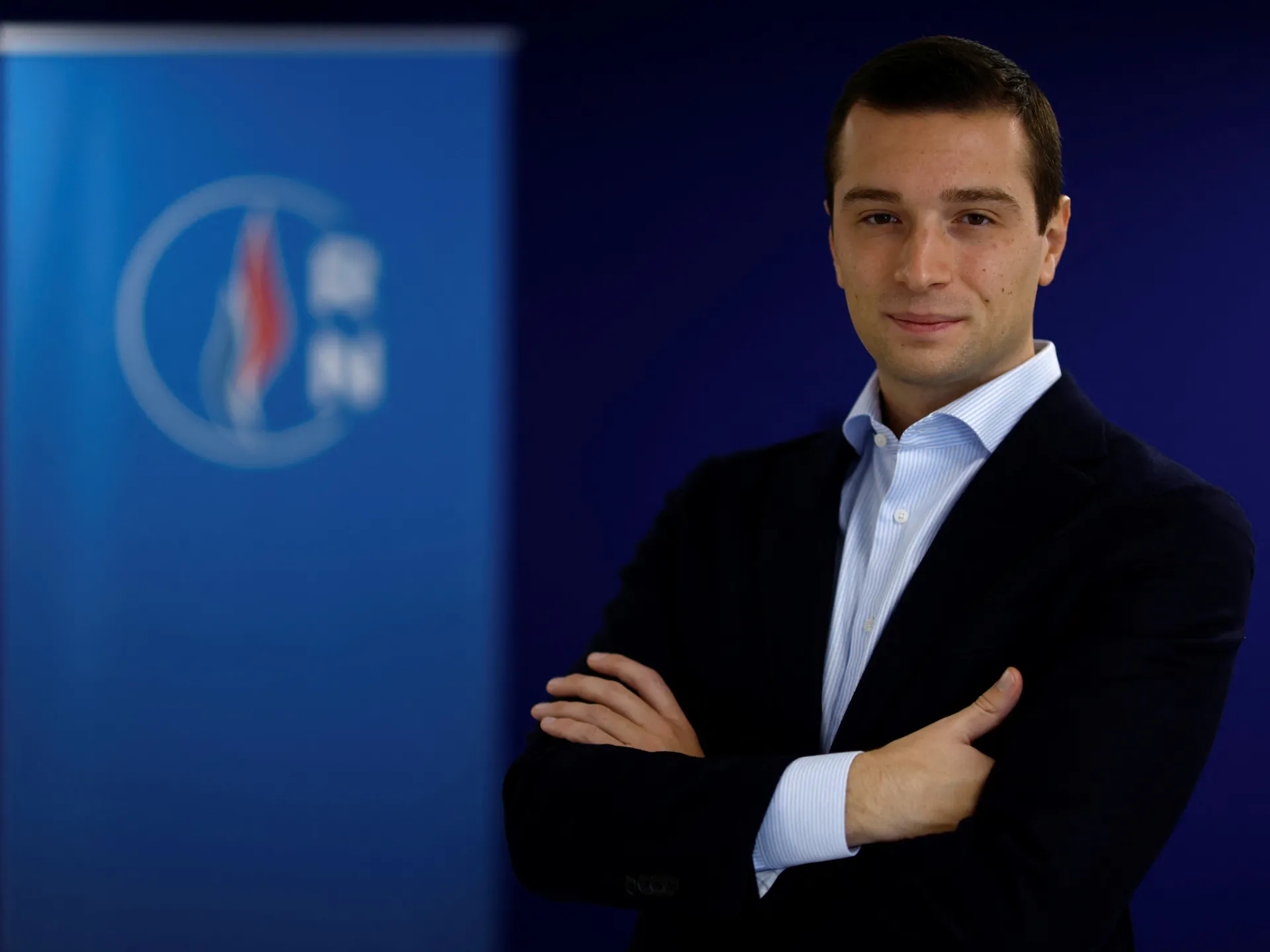


The Outsider's take
Paris, France—September 28, 2026
Jordan Bardella has long promoted a sanitised version of the National Rally, but a recent Mediapart investigation suggests the facade may be cracking. The report, backed by independent verification of private exchanges from 2013 to 2015, paints a compelling, troubling picture of a young Bardella—then a fervent Front National activist—believing in conspiracy theories, praising hate ideologues, and hinting at a dangerous worldview.
Mediapart reveals that Bardella once thought banks were "owned by Jews," envisioned a "New World Order" dominated by Israel, and admired Alain Soral, a convicted racial hatred inciter. He allegedly pointed to Hollande's ministers as serving Jewish and banking interests, and toyed with 9/11 conspiracy theories. Witnesses and internal emails describe a party environment where Nazi propaganda reading lists circulated among activists, Bardella included. When asked about these claims, Bardella did not respond.
The story intensifies with allegations of a cover-up. In 2014, Bardella co-signed a memo advising candidates to carefully manage their social media presence to avoid "media storms" over party literature—raising questions about whether the real issue was merely avoiding exposure of past hatred. As he allegedly wrote in 2013, "Politics is all about communication," revealing the core of the so-called "de-demonisation" strategy. Today, the RN claims to be a defender of French Jews, urging voters to believe the old party’s ideals have been left behind.
Bardella's party roots run deep. Founded in 1972 by Ordre Nouveau—a far-right movement with ties to neo-Nazi and terrorist groups—the Front National was built on a foundation of extremism. Jean-Marie Le Pen led the party into prominence, with figures like Waffen-SS veterans and neo-Nazi sympathisers shaping its early years. It was only after decades of obscurity that it became a major force, reaching the presidential runoff in 2002. When Jean-Marie Le Pen stepped down in 2011, his daughter Marine took the reins, and Bardella assumed leadership in 2022.
This historical pedigree explains the ongoing "de-demonisation" strategy. Rebranding as a more acceptable face of extremism relies on convincing voters that the party’s dark past has been erased. Yet Bardella himself has fluctuated on this point, claiming in 2023 that Jean-Marie Le Pen was "not anti-Semitic"—a statement he quickly retracted under pressure. Mediapart reports that Bardella privately argued in 2013 that the party's core ideology remained unchanged since its inception.
Now, Bardella denies everything: branding the allegations as "crude fakes" and a "dirty tricks" operation. He claims he was still a minor in summer 2013, contradicting his own autobiography, in which he states he joined the party in 2012 at age 16. The controversy sparks pressing questions: will the documents stand up to scrutiny? Will Bardella take legal action? And most critically, will voters who believe the party has transformed buy into the lie?
As we look ahead to 2027, the man who dismissed a few "black sheep" may now need to explain the entire shepherd. With the credibility of the National Rally at stake, the real question isn’t just about its past—it’s whether the man promising to lead France truly left it behind.