
International Cooperation · 21 Oct 2026
He Called Putin a Humanitarian. Now Let's Talk About What That Means
The Outsider's take
By The Outsider · 21 October 2026
Some sentences you can't unhear.
Trump's envoy called Putin a humanitarian in St Petersburg today. What it means for Ukraine, Europe and everyone watching.
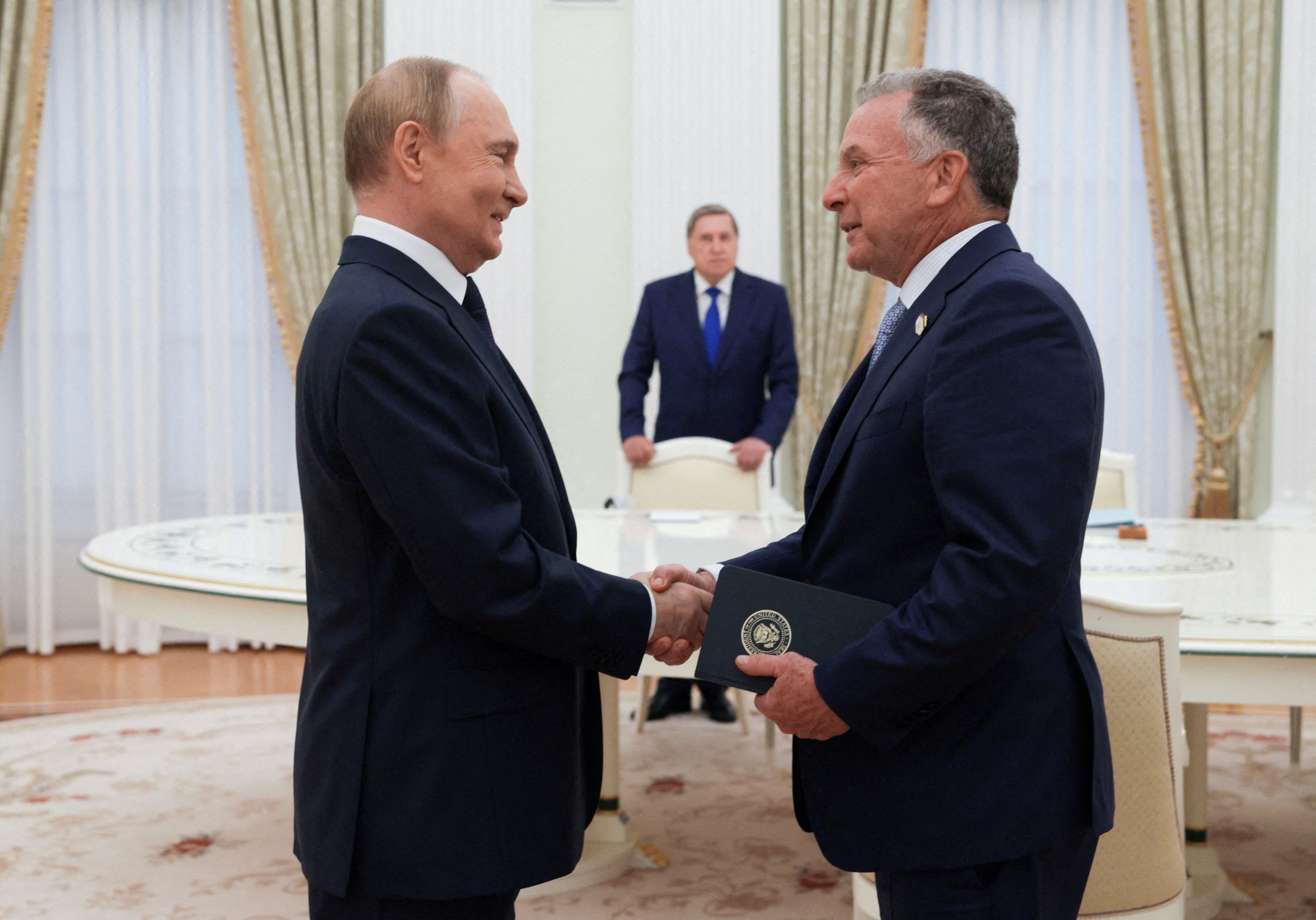
Today in St Petersburg, Donald Trump's envoy, Steve Witkoff, sat across from Vladimir Putin and said on camera, "You talk so much about my president, President Trump, being a humanitarian — you are a humanitarian also, sir, and I salute that."
The remark drew immediate attention because of who sat on each side of the table. Putin is the subject of an International Criminal Court arrest warrant, issued in March 2023, over the alleged unlawful deportation of Ukrainian children to Russia. Moscow rejects the charge and does not recognise the court's jurisdiction.
The meeting also came as UN monitors reported some of the deadliest weeks for Ukrainian civilians in years, with 328 killed in September alone, and as Russian strikes on energy infrastructure continued ahead of winter. Critics called the wording striking. Supporters of the administration say it was a gesture meant to keep a diplomatic channel open after Moscow released an American prisoner.
What actually happened.
The trigger was a prisoner release. Putin freed Stephen Hubbard, a retired American teacher held in Russia since 2022. Witkoff thanked him, handed over papers with ideas for ending the war, and asked for US-Ukraine-Russia talks to restart. Putin asked him to pass his gratitude to Trump and Melania Trump for "helping resolve humanitarian issues."
Around the same time, Moscow's line was blunt. Lavrov said Russia would study the proposals but make no political concessions. Peskov rejected even a pause in energy strikes: "We need peace, not a ceasefire."
So Russia gets the praise and the photo op. Ukraine gets nothing and wasn't in the room.
An old story.
American presidents have been doing this for forty years. Reagan negotiated hard, with real leverage, and got the INF Treaty ( The Intermediate-Range Nuclear Forces Treaty) in 1987. Clinton hugged Yeltsin while NATO moved east. George W. Bush said he got "a sense of his soul" from Putin in 2001, and Georgia followed in 2008. Obama pushed a "reset" button in 2009, and Crimea fell in 2014. Trump stood beside Putin in Helsinki in 2018 and seemed to take his word over US intelligence. Biden rallied the West after 2022 but was slow on the weapons that mattered.
The pattern: each believed personal chemistry could replace leverage. Putin never did.
The KGB officer who never left the room.
Putin spent 16 years in the KGB, from 1975 to 1991, including a posting in Dresden, East Germany. He was a mid-ranking officer, not a master spy. But the job was to cultivate people, read their vanities and get them to give something up.
By his own account, the moment that shaped him came in December 1989, when crowds stormed the Stasi offices in Dresden. He has described calling Moscow for backup and being told, in effect, that Moscow was silent. Two years later, the Soviet Union was gone, which he later called "the greatest geopolitical catastrophe of the century." Many analysts argue that humiliation drives his view of the West.
The KGB's toolkit includes "active measures": disinformation, planted stories and quiet backing for friendly voices. To be clear, nothing special when it comes to intelligence agencies. In January 2017, the US intelligence community concluded that Putin ordered an influence campaign to interfere in the 2016 election. Moscow denies it.
Seen through that lens, St Petersburg follows a familiar script.
Hold an American prisoner, release him as a favour, and let the other side's praise become the product. Russia did something similar in 2022, swapping WNBA star Brittney Griner for the arms dealer Viktor Bout. Freeing Americans is a legitimate goal for any US government. The risk is the price, and Moscow sets it.
(NB: Claims that Putin "controls" American leaders with compromising material are unproven, and this article doesn't make them.)
Trump, round two.
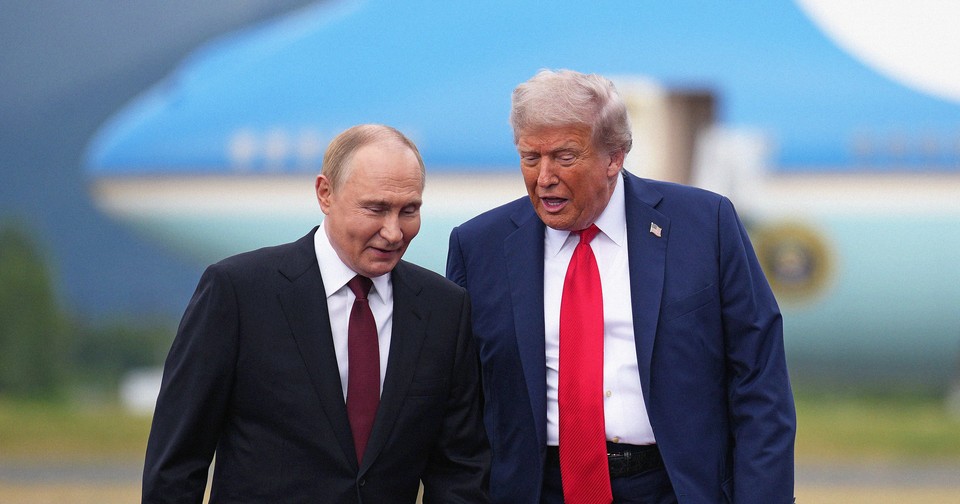
Since January 2025, the style has been consistent: big gestures, soft follow-through. The “already historical” Oval Office clash with Zelensky. The red carpet in Alaska. Deadlines that pass.
A Budapest summit that never happened. Today, Lavrov himself warned the world not to overrate Washington's decision not to enforce the Graham sanctions bill. When the Kremlin is explaining that American pressure is soft, the pressure is soft.
Trump keeps telling Zelensky to "make a deal", criticises Ukrainian strikes on Russian energy sites and has reportedly delayed Patriot interceptors that Europeans already paid for. Meanwhile, even Peskov admits the war can't be fully settled without Kyiv.
Trump's defenders have a case. The old approach ended in stalemate. Someone has to talk to Moscow. A prisoner came home, and intelligence sharing with Kyiv has resumed. But talking to Putin isn't the scandal. Handing him a ready-made propaganda clip is.
What does it mean for Europe?
Europe has been moved from partner to spectator. Chancellor Friedrich Merz of Germany,says forcing Ukraine to surrender would be a defeat for all of Europe. That only means something if Europe acts on it:
Pay and arm as if US support were a bonus, not a foundation. Statements don't stop missiles.
Get one negotiator and one set of red lines before a US-Russia deal lands like a verdict.
Prepare the northern and eastern flank. A Russia rewarded for Ukraine won't stop respecting borders out of politeness.
What it means for the rest of the world.
If you live in Africa, Asia or Latin America, the message is: borders are negotiable if you're strong and well connected. A permanent member of the UN Security Council invaded its neighbour, and now the world's most powerful state is saluting it. Every government with a disputed frontier is taking notes, including those of us who care about the Great Lakes (Congo-Rwanda). China watches Taiwan. India and the Gulf keep buying Russian energy. And the Global South keeps hearing lectures about the "rules-based order" from the same capitals now bargaining over it in private.