
Politics · 23 Oct 2026
Judgment Day for Bibi: The Man Who Was in Charge on October 7 Will Face the Voters on Tuesday


The Outsider's take
The Outsider/ October 23, 26
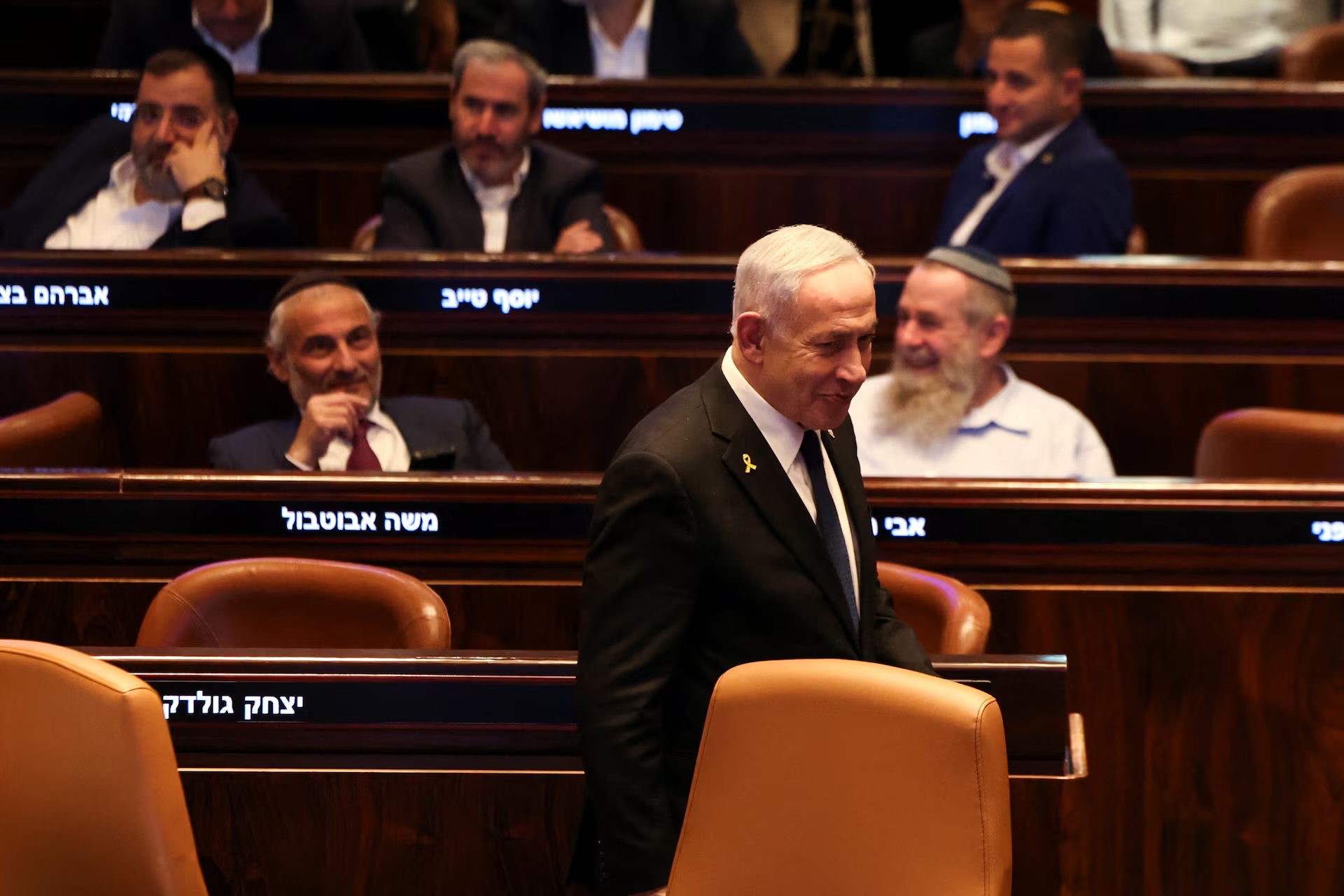
On Tuesday about seven million Israelis choose their next government. Benjamin Netanyahu has served for 19 years across three stints, faces corruption charges, and says he needs more time to "finish the job." Facing him is a field led by former army chief Gadi Eisenkot. Gaza, Iran, Lebanon and the West Bank all hang on the result. The people who live inside those conflicts get no vote, and neither do the Jews abroad who live with the fallout.
Can he win?
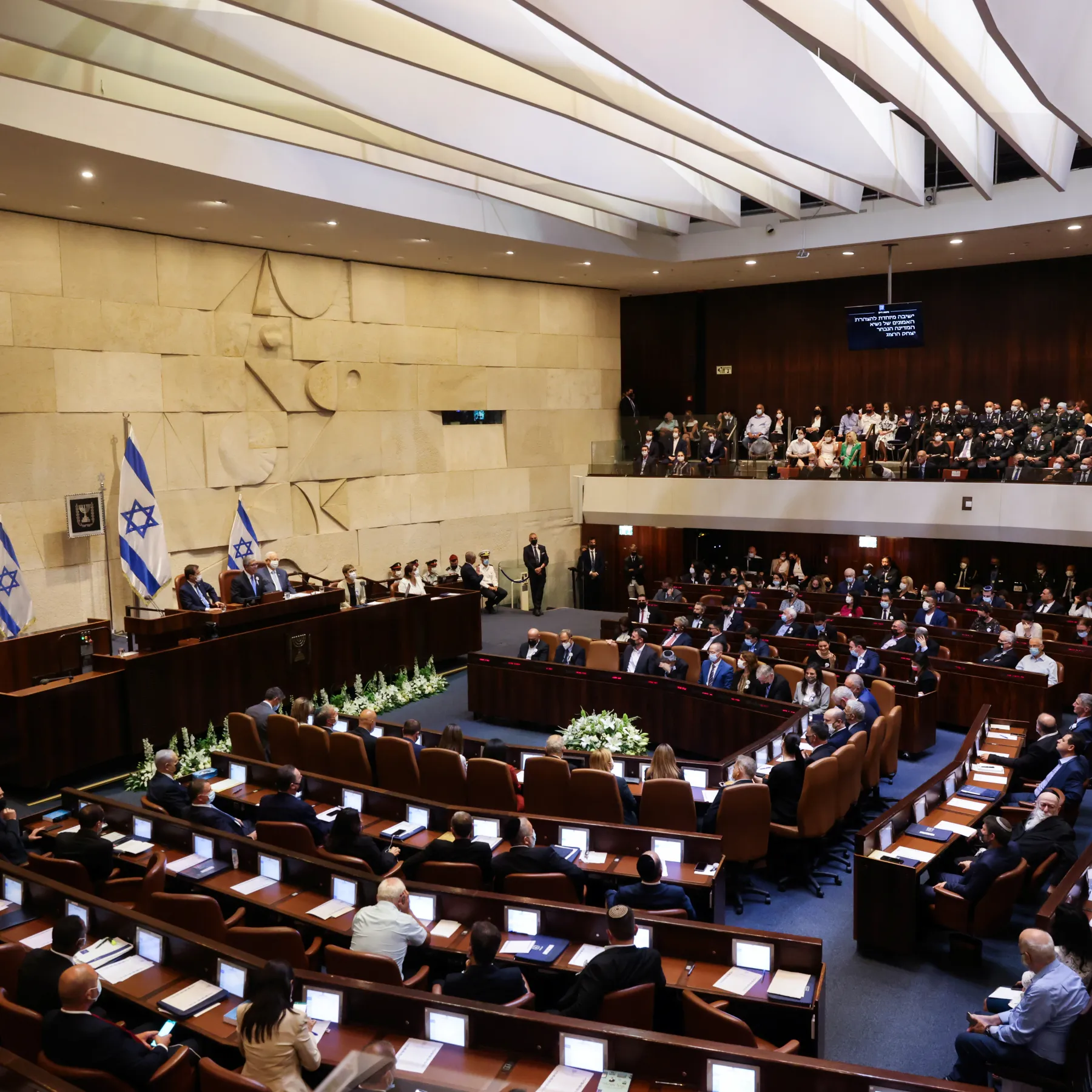
Nobody knows. The polls show a near tie, and neither side can reach the 61 seats it needs for a majority in the 120-seat Knesset.
The latest i24NEWS poll gives Netanyahu's Likud 25 seats, Eisenkot's Yashar 21 and Bennett's Together 13. Together is the merger of Naftali Bennett and Yair Lapid. Netanyahu's bloc of allies is stuck at 57. Other polls put Likud and Yashar within a seat or two of each other, so the race for first place is open. Behind them, Shas and the Democrats each have about 9 or 10 seats. The Arab parties together have about 10 or 11, and they could decide who gets to 61.
The twist is that a tie still helps Netanyahu. One JPost analysis argues he may only need 55 seats to win. He stays on as caretaker prime minister until a new government is sworn in, so if nobody reaches 61, the clock runs in his favour. Prediction markets saw a coin flip, with Polymarket giving Eisenkot roughly a 49% chance of becoming prime minister. Another possible result is a unity government, with Netanyahu and Eisenkot sharing the top job.
The Ben-Gvir problem.
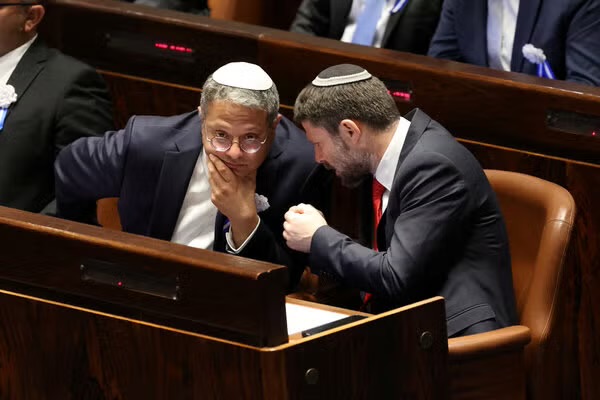
The man to watch is Itamar Ben-Gvir, the far-right national security minister, whose party hit double digits in one poll. He wants the Defence Ministry, and Netanyahu has so far refused. He says he won't join a unity government with Eisenkot, so he can block the deal many in Washington would welcome. That makes him a kingmaker, and his price is the issue.
Look at his own campaign video. Weeks before the vote, he posted a clip in which, flanked by masked guards, he tells imprisoned Hamas member Hassan Salameh "I want to kill you". In the same post, he said that as defence minister he would work to execute Palestinian prisoners like him and to advance what he calls "voluntary migration" of Palestinians from Gaza and the West Bank. This isn't new for him.
In February he posted footage from Ofer Prison showing police storming a hallway with stun grenades and forcing detainees face-down, calling it a source of pride. Israel's Central Elections Committee has already ordered him to remove an earlier video, and a Supreme Court deputy president ruled that such footage was election propaganda made with public resources. Palestinian prisoner groups warn it is also a real threat to detainees' lives.
For Israel, the problem is the damage to the state's own rules. He has convictions for incitement to racism and supporting a terrorist organisation, and his prison service has faced abuse allegations. In September 2025, Israel's High Court ruled that the prison service was not feeding Palestinian detainees enough.
For the West, the problem is the policy. Britain, Canada, Australia, New Zealand and Norway sanctioned him and Finance Minister Smotrich in 2025 for incitement to violence against Palestinians, and the European Commission has proposed sanctions on both. Talk of "voluntary" emigration is what critics call ethnic cleansing, and eight Arab and Muslim states have condemned Israeli talk of population transfer.
He sees it differently. Supporters see him as the one minister who refuses concessions to terrorists, and he says emigration would be voluntary, not forced.
What Israelis think of their prime minister?
On responsibility for October 7, they have largely made up their minds. A poll published on October 6 found that 65% say Netanyahu bears a great deal of responsibility, 22% some, and only 6% none. The split is political. Among those blaming him heavily, 91% are opposition voters, but 27% are coalition voters. Another 47% blame the government and the army equally. The country isn't arguing about whether he is responsible. It is arguing about how much, and whether that should end his career.
Could he have stopped October 7?
Nobody can prove it, and we won't pretend to. But the case against him is not frivolous. For years his government tolerated Hamas rule in Gaza as a manageable problem, and that policy failed catastrophically. His office says no intelligence document ever reached his desk warning that Qatari money was feeding Hamas's military wing. Israelis are entitled to hear that tested by an independent body, under oath. Netanyahu has opposed a full state commission of inquiry, so until one exists, "could he have stopped it" is a question for evidence. His refusal to let investigators gather it is part of the story.
Did his government fund Hamas through Qatar?
The accurate version is uncomfortable enough. A TIME investigation, summarised by the Times of Israel, found that Israel coordinated and facilitated nearly $2 billion in Qatari payments to Hamas-run Gaza over more than a decade, including cash delivered by suitcase. Qatar says Israel was its partner and that the money was for Gaza's people. Netanyahu's defenders say it paid for fuel, families and civil servants' salaries, and that security bodies monitored it. Critics say it kept Hamas in power and divided Palestinians, which suited a prime minister opposed to a Palestinian state. A former Mossad official claimed a significant share reached Hamas's military arm.
An N12 report says the Shin Bet warned in 2020 that Hamas's military chief was skimming $4 million from each instalment, which his office denies. Separate from that is "Qatargate." Two Netanyahu aides, Jonatan Urich and Eli Feldstein, were arrested in 2025 over suspicions that Qatar paid them to promote its interests. Netanyahu and Likud deny wrongdoing, and no indictments have been reported. The irony stands either way: a leader who campaigns against Qatar's influence spent years letting its money flow into Gaza.
Are Jews around the world less safe because of his policies?
Start with what is beyond argument. Those who attack Jews are responsible for their own violence, and Jewish communities abroad don't choose or answer for Israel's government. The data on risk are stark. Hundreds of people were killed in antisemitic attacks in 2025, the deadliest year for diaspora attacks in over three decades. In Britain, 1,926 incidents were recorded in the first half of 2026, up 21% on the same period a year earlier. It ties the rise partly to the war involving Israel, the US and Iran, which began on February 28, and to Iran-linked attacks on Jewish sites in London.
About 41% of incidents referenced Israel or the conflict. The argument against Netanyahu is that a leader who claims to speak for all Jews, and who keeps Israel in permanent multi-front war, widens the gap between a government and the communities abroad that get blamed for it. His defenders answer that this excuses hatred, that antisemitism long predates his premiership, and that Iran's plots against Jewish targets are Tehran's doing. Both can be true. A leader can bear no blame for the hatred and still be accountable for choices that raise the stakes.
Gaza: a ceasefire with no peace.
Trump's plan promised a ceasefire, hostage releases and a Board of Peace. The hostages are home, but almost everything else is stuck. AP (press agency) reported in September that Hamas hasn't given up its weapons, the international force and new government haven't entered Gaza, and reconstruction hasn't begun. The Board's answer was a $2.45 billion starter plan, against a damage bill of roughly $35 billion.
Netanyahu says reconstruction shouldn't start before Hamas is disarmed. Hamas agreed to a disarmament roadmap in July, but an IDF intelligence report now concludes it can only be disarmed through renewed combat.
Meanwhile, Israel has kept attacking Gaza during the ceasefire, killing hundreds of Palestinians. JPost reports that the Board of Peace expects reconstruction to ramp up after the Israeli election and the US midterms. Two million people are on hold for two ballot boxes.
Iran and the other fronts.
The war with Iran is no longer a shadow war. On February 28, Israel and the US struck Iran's nuclear sites, missile bases and command centres. A US-Iran memorandum later collapsed in July as the war resumed. Netanyahu's campaign video says he and Trump "crushed Iran," and he promises to eliminate the Iranian threat within two years.
Journalists reported that Trump and Netanyahu discussed a major new operation against Iran before the elections. However, Trump's endorsement to BIBI may have been compensation after he refused to launch another attack.
That is one person's theory, not established fact. But when a war plan and an election calendar line up this neatly, voters are entitled to ask which one is driving the other. In Lebanon, a ceasefire from April 17 exists on paper. In practice, Israel keeps striking, and the text lets it act against imminent threats. On October 6, a strike east of Beirut killed five people.
The West Bank: they beat an American on camera.
On October 16, Washington Post photojournalist Heidi Levine was covering the olive harvest at Abu Falah. CBS obtained video of around 20 masked men coming down from an outpost into the olive grove. Levine says she was forced to the ground and beaten for more than ten minutes, and that her camera, passport and phone were taken. She was wearing a vest marked "PRESS." AP says she needed surgery, and Al Jazeera reports broken ribs and vertebrae.
The response was a split screen. US Ambassador Mike Huckabee called the attack an act of terror by masked cowards and demanded prison. Rubio said Washington was "very disturbed" and wants Israel to crack down. Israeli police arrested 10 suspects days later, and Huckabee welcomed it.
But Israel's leadership did not speak with one voice. The foreign minister and the army blamed "Israeli rioters" for a separate attack on French, Belgian and Polish diplomats in Taybeh. Netanyahu called the facts of the Levine attack unclear, and Levine said she was shocked and insulted.
Washington's tough words come with few consequences. Britain, France, Canada and others announced settler-focused sanctions last month, and the US said it would not join them. Weeks earlier the US Senate voted down a bill requiring a State Department report on rising West Bank violence.
The wider numbers show Levine's attack is no outlier.
OCHA (The United Nations Office for the Coordination of Humanitarian Affairs ) counted about 190 settler attacks a month in 2026, up from 153 a month in 2025. The UN human rights office describes state-backed settler violence clearing large areas of Palestinians, with the participation of Israeli security forces. That is the UN's characterisation, and Israel's government rejects it. Rights groups say attackers are rarely arrested or punished, so ten arrests are a start, not a verdict.
Trump: the endorsement and its price.
Nine days out, Trump gave Netanyahu a complete and total endorsement. He also threatened to "finish the job" on Iran while hinting he might not want to if Netanyahu loses. Asked whether he could work with another Israeli leader, Trump answered, "Maybe I will, maybe I won't." It may not even help.
Trump's approval rating in Israel dropped sharply afterwards. Eisenkot's answer was short: only Israelis can choose their leader. Trump has broken with US tradition by endorsing in foreign elections in Hungary, Colombia, Argentina, Japan and Honduras. Israel is simply the biggest stage yet.
Europe and the neighbours.
Europe finally moved, slowly. After Hungary's change of government removed the veto, EU ministers agreed on sanctions on three settlers and four settler organisations. There is still no consensus to curb trade ties with Israel, and critics call the settler sanctions a "smokescreen" that delays real action against the Israeli state.
The neighbours are watching with fear and calculation. Eight Arab and Muslim states, including Saudi Arabia, Egypt, Jordan, Turkey and Qatar, jointly condemned Israeli politicians' talk of population transfer.
Arab governments reaffirmed support for Palestinian statehood in a joint statement on October 16. Jordan fears a displacement of Palestinians across the Jordan River that would threaten its own stability. Turkey has become a campaign villain: Netanyahu put it at the centre of his billboard campaign days before Israel struck an airbase in Syria, an attack Trump's envoy Tom Barrack called an "unnecessary escalation." Netanyahu is still dangling expansion of the Abraham Accords, which he raised in his call with Trump.
The bottom line.
Our argument is simple. This election is sold as a choice between war and a new era. The evidence says it is a referendum on one man's survival, fought over the same unresolved wars. A leader who presided over the worst failure in his country's history should answer for it before an independent body, not just at the ballot box. The Qatar money, the missing inquiry and the rising danger abroad are the evidence voters should weigh.
The best case for Netanyahu deserves its full hearing. His supporters say he decimated Iran's leadership, battered Hezbollah, brought the hostages home and kept Washington on his side.
They say the security establishment, not the politician, misread Hamas, and that the Qatari money was approved by security bodies and coordinated with allies. They say settler violence is the work of a small extremist fringe, and they cite the quick arrests as proof the system works. The opposition has its own problem. Analysts say an opposition victory may bring only marginal change in Gaza or the West Bank, and Eisenkot himself wants Israeli forces to stay in Gaza until Hamas disarms. A new face may not mean a new policy.
Watch three things on Tuesday: whether the Arab parties turn out, whether the far-right parties clear the threshold, and whether anyone can assemble 61 before Netanyahu's caretaker clock does the work for him.